
A practical small-apartment guide
How to Declutter a Small Apartment Without Losing Useful Things
Make a small apartment easier to live in by removing friction first, not by throwing away everything that does not fit a picture.

Decluttering a small apartment is not the same as making a large house look minimal. In a compact home, one unstable stack can block a door, one overfilled surface can turn cooking into a daily negotiation, and one poorly chosen container can consume the space it was supposed to save. The useful question is not “How do I get rid of the most?” It is “Which decision would make this room easier to use tomorrow morning?”
This guide treats decluttering as a sequence of small, visible decisions. You will identify friction, measure the route, choose a category, set a physical limit, and decide where each item goes next. The process is intentionally gentle. A small apartment needs practical boundaries, not shame, dramatic promises, or a universal method that ignores your lease, household, mobility, work, or storage reality.
Use the 20 ideas as a visual field guide, then adapt them to your own rooms. Some ideas are five-minute edits. Others are systems that stop the same category from returning to the floor. Begin with the ideas that solve a daily problem, not the ones that look most satisfying in a photograph.
Short Answer
The safest way to declutter a small apartment is to start with one repeated problem, protect the main walking route, and sort one category at a time. Keep items that are used, genuinely useful, or meaningfully valued. Give usable items a verified next destination, isolate anything uncertain, and check local rules before disposing of electronics, batteries, paint, cleaners, or other household hazardous waste. The goal is not an empty home. It is a home where the things you keep have clear jobs and the rooms remain easy to reset.
1. Start with friction, not a fantasy of perfection
The first section is about choosing a useful starting point. A room does not need to be empty before it can work better. Begin where your body, hands, or attention repeatedly meet resistance.

Idea 1
Start with one repeated friction point
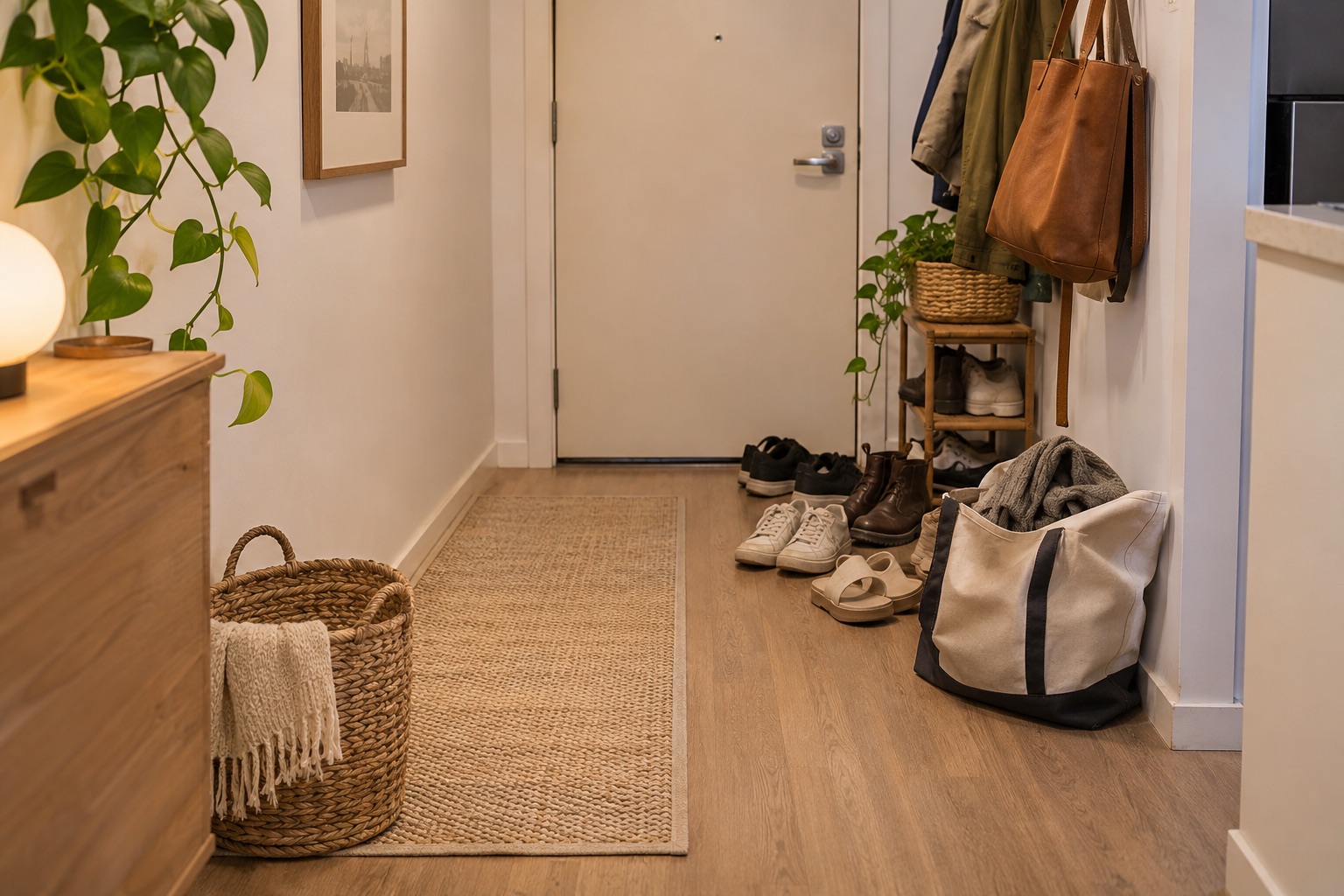
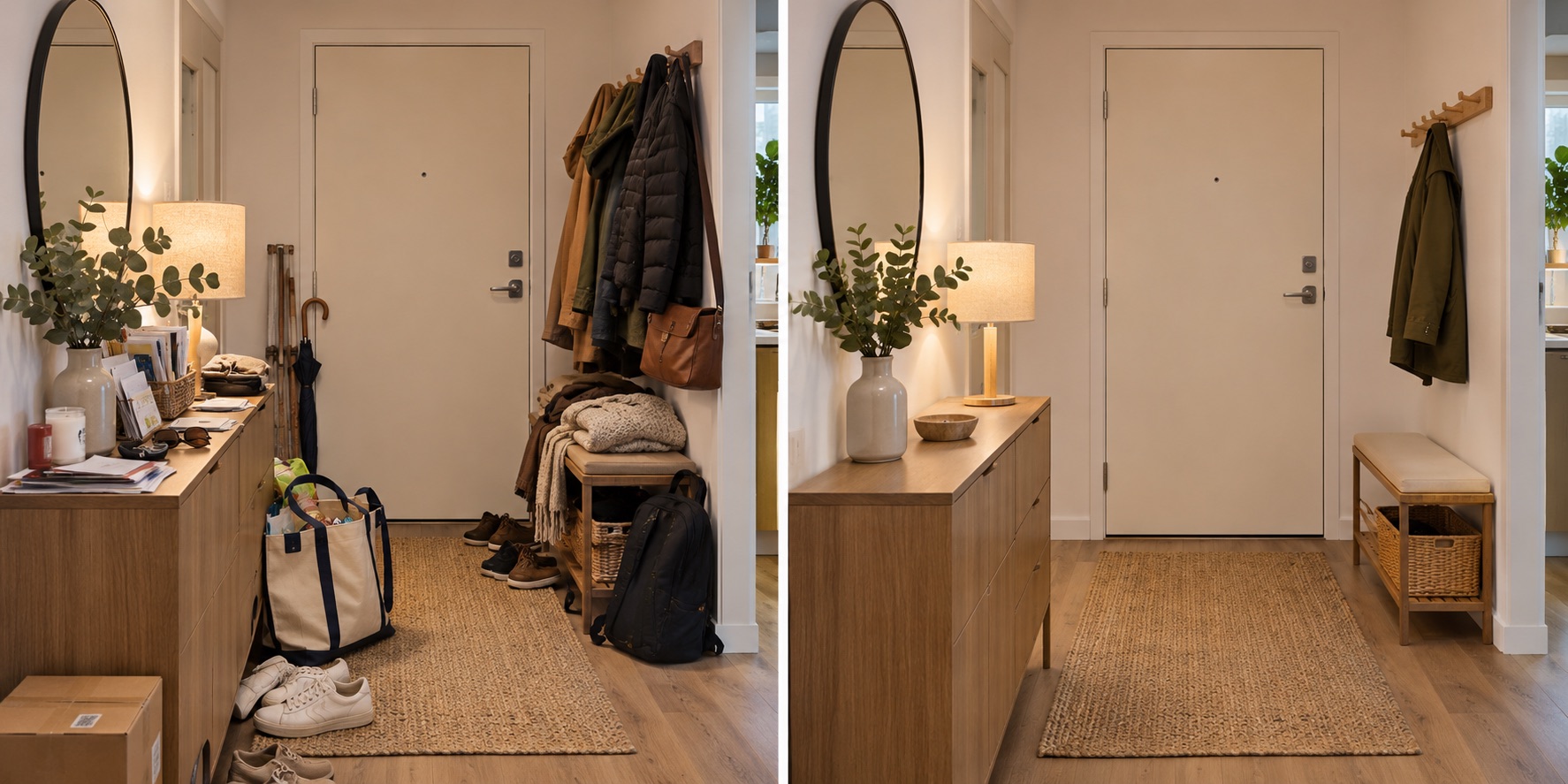
Write one sentence about the problem you experience repeatedly: shoes block the door, mail covers the only table, or laundry has no landing place. This turns decluttering into a measurable task. You are not trying to improve every room at once. You are choosing one point where a small decision can remove a little daily resistance.
Make it work: Name the friction in plain language, then photograph the area before changing it. The picture gives you a baseline and stops the project from becoming an endless search for flaws.
Idea 2
Protect the route you use every day

The main route through a small apartment deserves priority over decorative symmetry. Mark the path from the entrance to the bathroom, kitchen, bed, or exit. Anything that narrows that path becomes a candidate for moving, reducing, securing, or giving a different home. Clear circulation is a functional improvement, not merely a visual preference.
Make it work: Walk the route carrying a laundry basket or grocery bag. If you have to turn sideways or lift something out of the way, record the obstruction before deciding what to keep.
Idea 3
Sort one category before one whole room
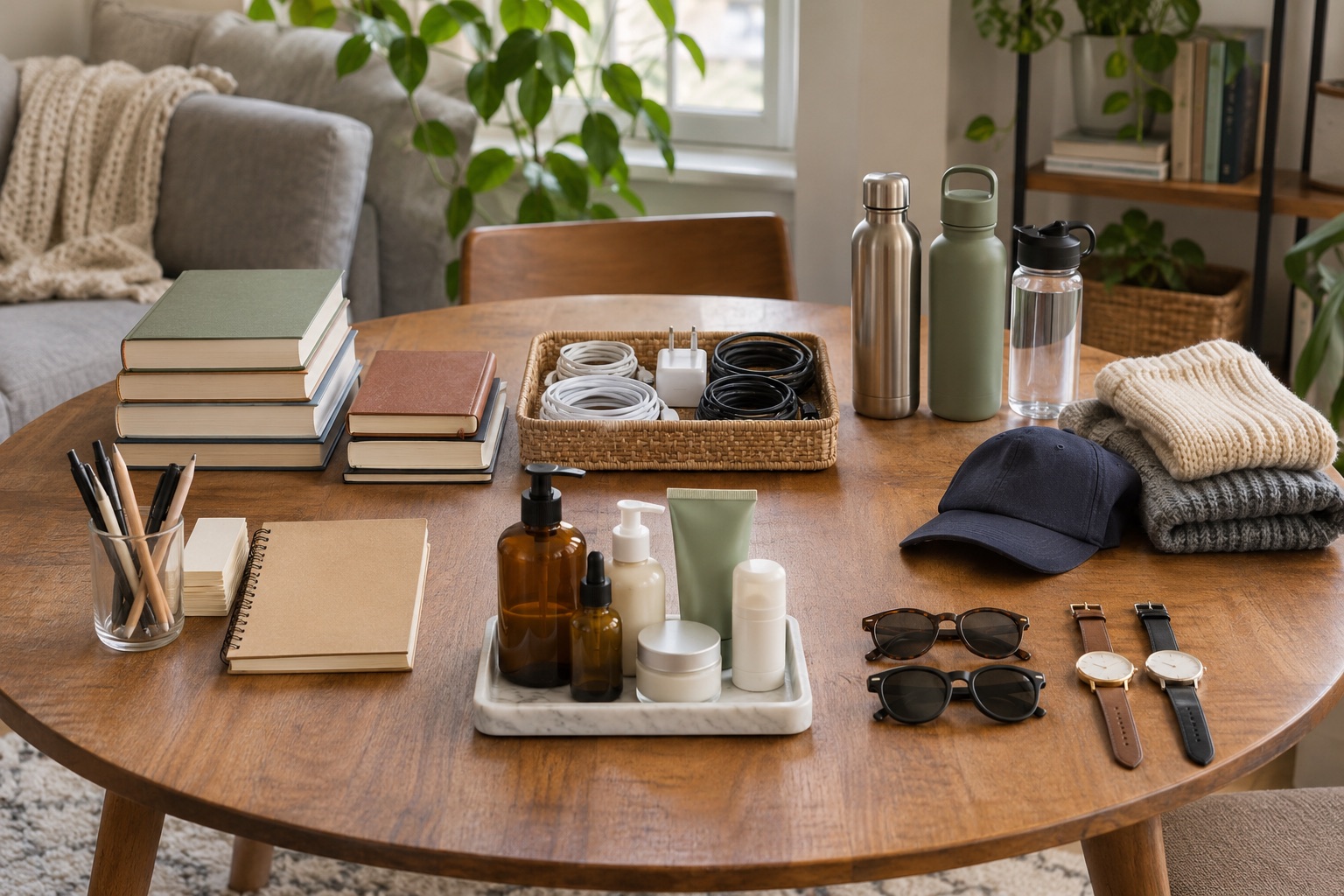
Whole-room sorting creates too many decisions at once. A category gives you a narrower question: Which mugs do we actually use? Which cables belong to devices we still own? Which cleaning products are duplicates? Grouping similar items makes repetition visible and helps you compare like with like instead of making isolated decisions.
Make it work: Choose a category that fits on one surface. Finish the category, return the kept items, and only then choose the next one.
2. Give the things you keep a physical boundary
Small homes become difficult when categories are allowed to expand without a visible limit. A boundary is not a punishment. It is a way to make the available space tell the truth.
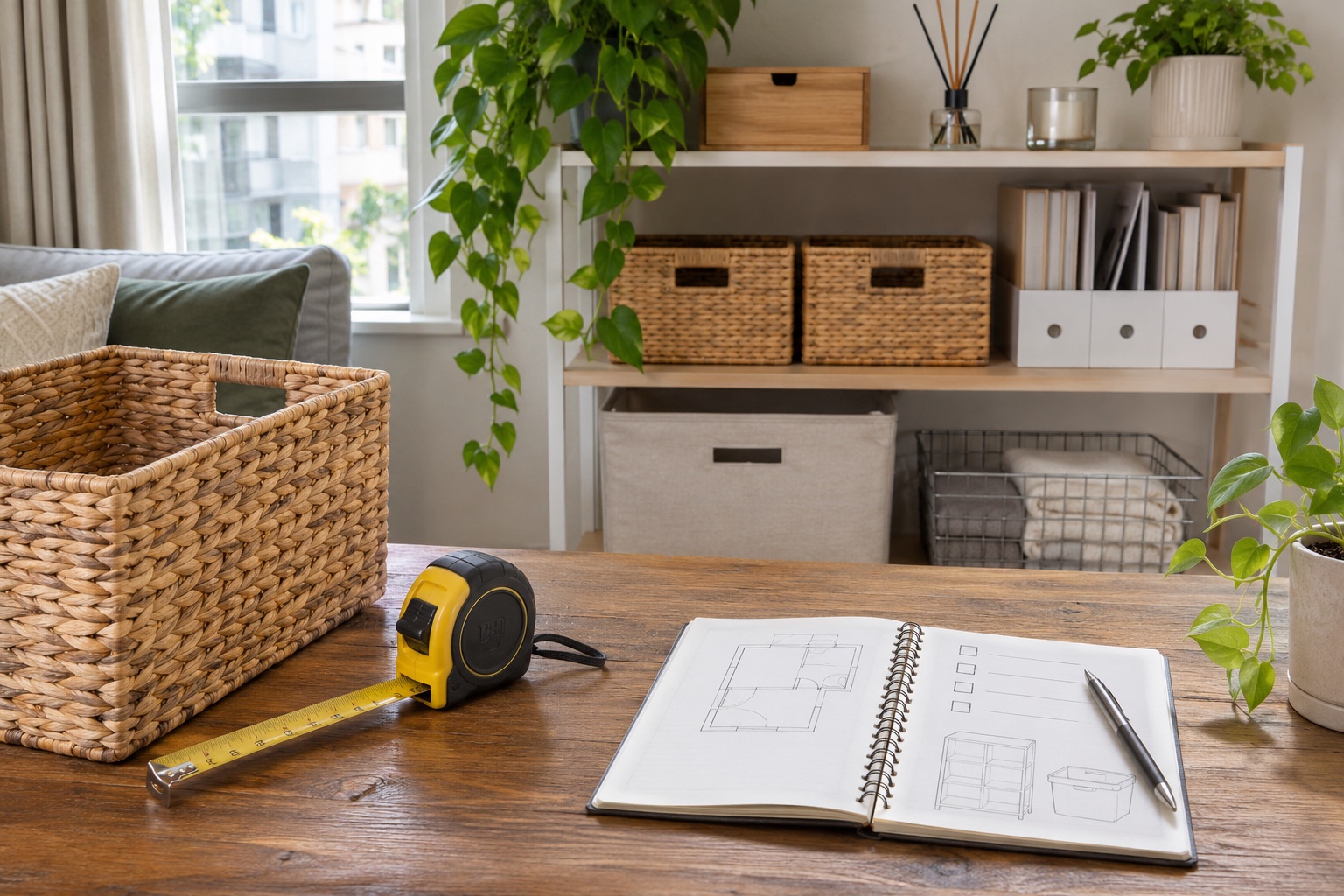
Idea 4
Set a visible boundary for each active category
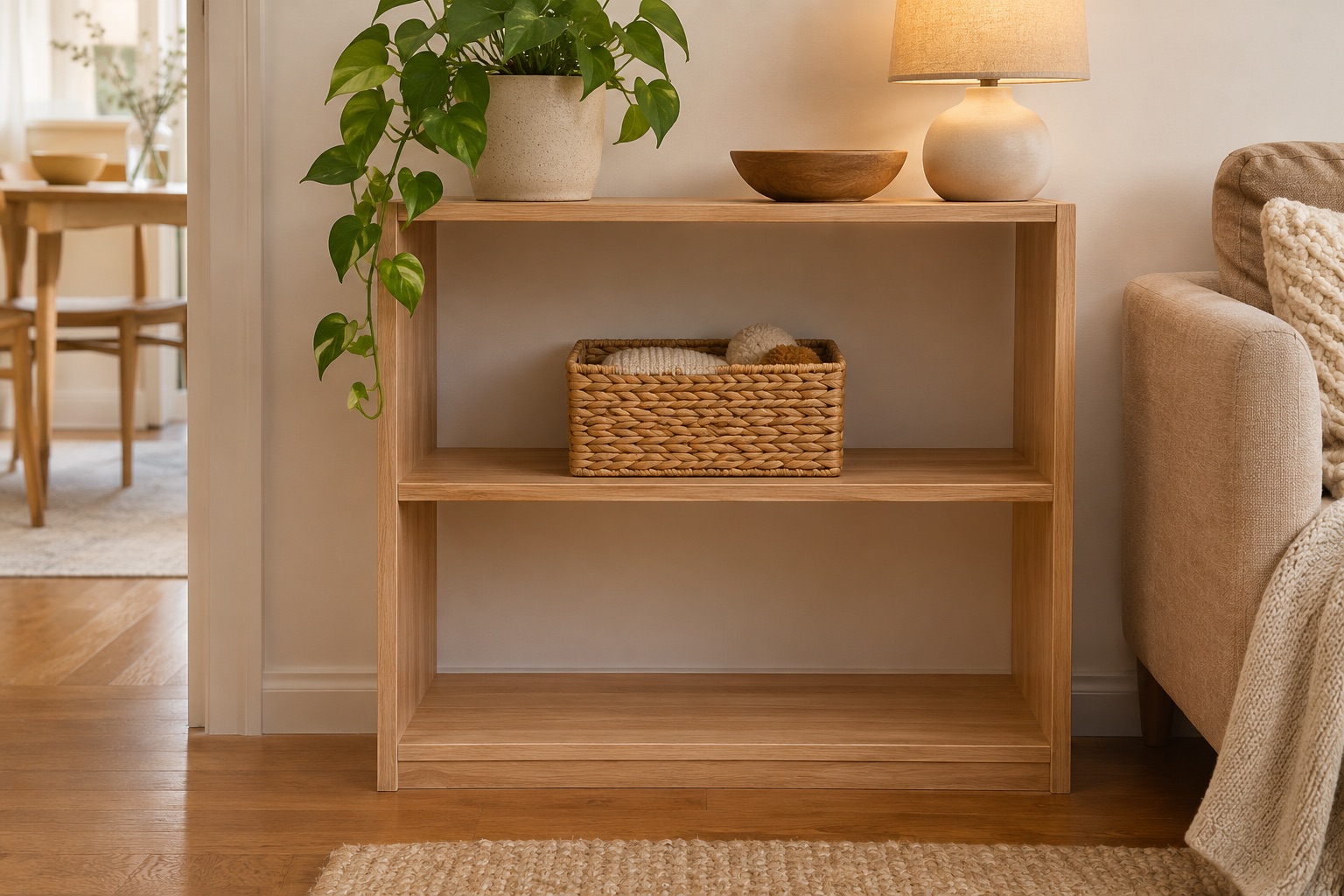
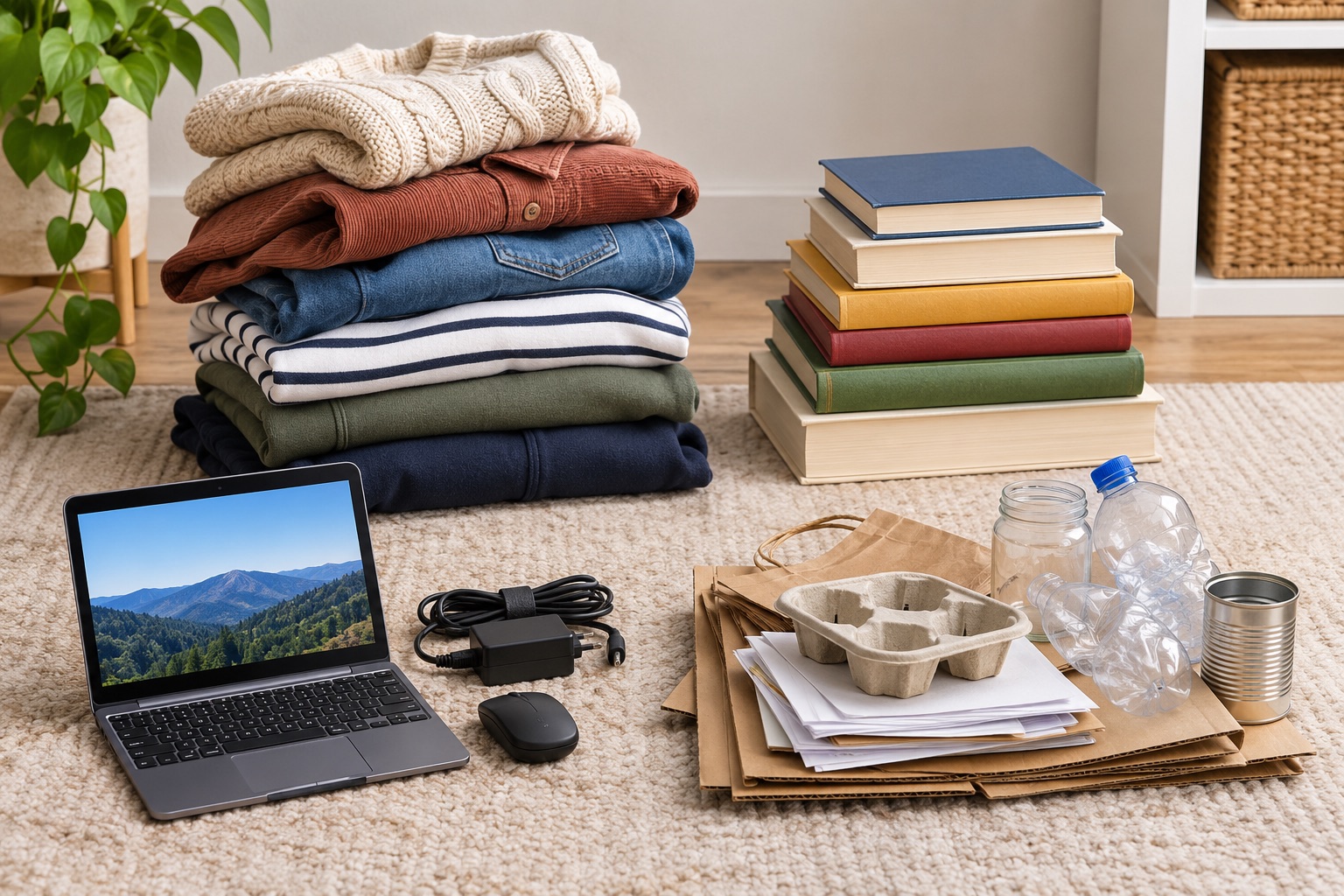
A category needs a home that reflects the amount of space you can actually give it. That might be one shelf for mugs, one drawer for tools, or one basket for winter accessories. When the boundary is full, the next decision is visible. You either remove something, move the category, or accept that the boundary needs a deliberate change.
Make it work: Measure the shelf, drawer, or basket before editing. Keep the boundary stable for a week so you can see whether it supports real use.
Idea 5
Keep daily-use items near their point of use
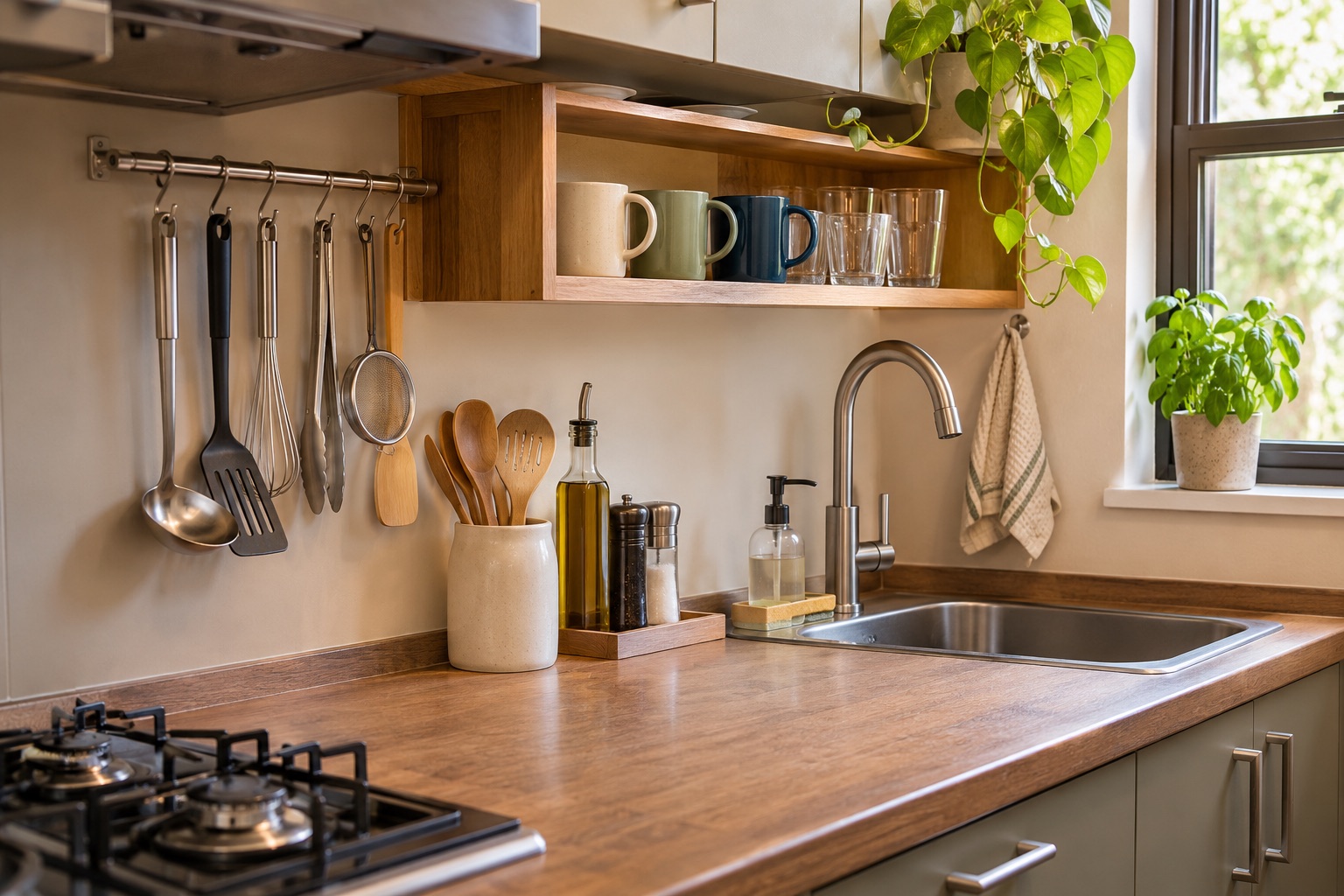
Decluttering fails when the system ignores how people move. If the mugs are used beside the kettle, storage across the room creates friction and encourages items to collect on the counter. Keep the things you use most where the action happens, then move occasional items higher, farther away, or into a clearly labeled backup area.
Make it work: Observe one routine without changing it. Put the item away only after you notice where your hand naturally reaches.
Idea 6
Create a one-hand landing zone
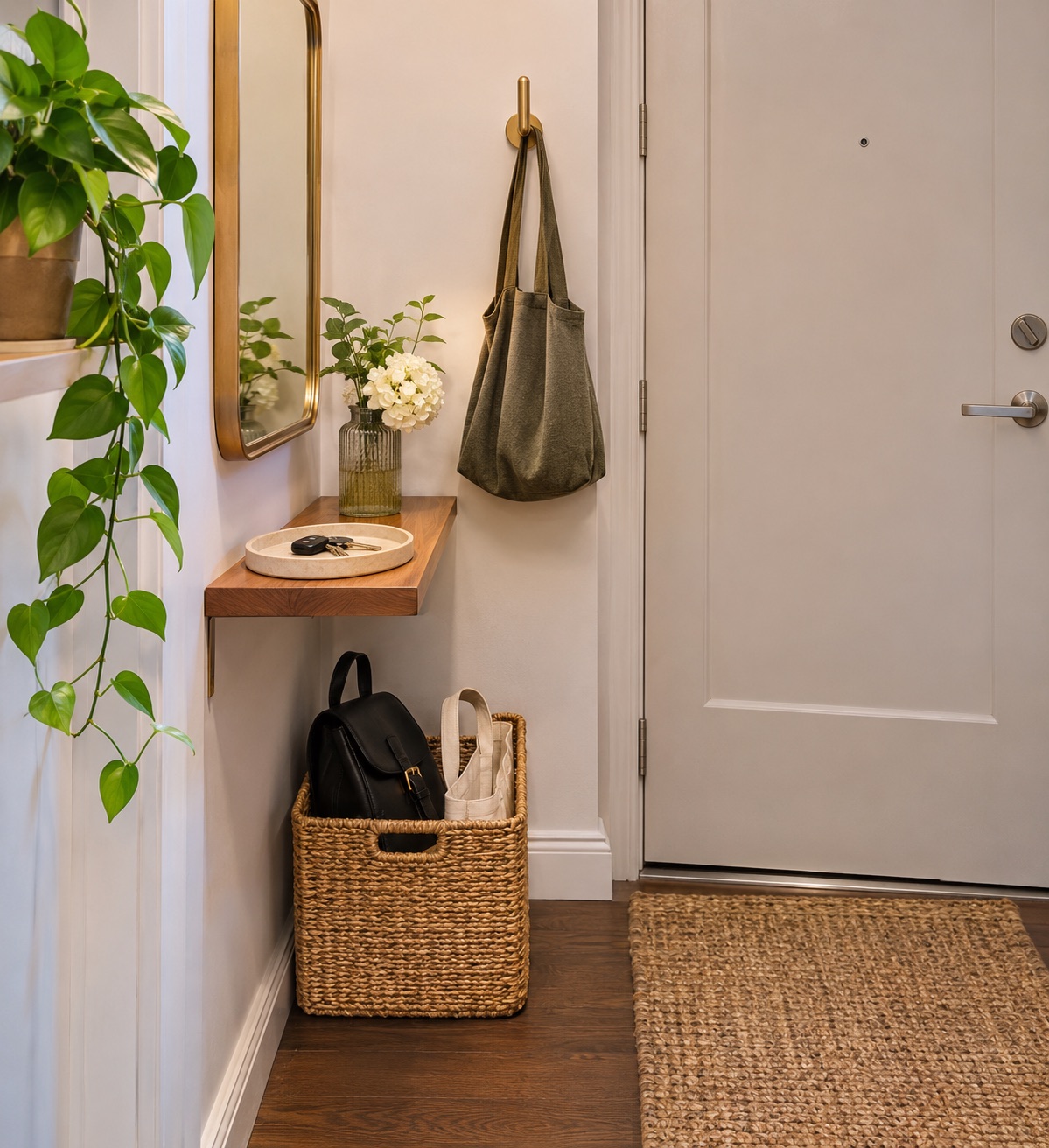
A small entry does not need a full furniture set. It needs a reliable place for the objects that arrive with you: keys, a bag, mail, shoes, or a reusable tote. The best landing zone is close enough to use without a second decision and small enough that it cannot become a second storage room.
Make it work: Choose one tray, one hook, and one container at most. If the zone cannot be reset with one hand, reduce the number of categories it accepts.
3. Make storage earn the space it occupies
Storage is helpful only when it makes retrieval and reset easier. Before adding shelves, boxes, or hooks, edit the category and test whether the current furniture can support it better.
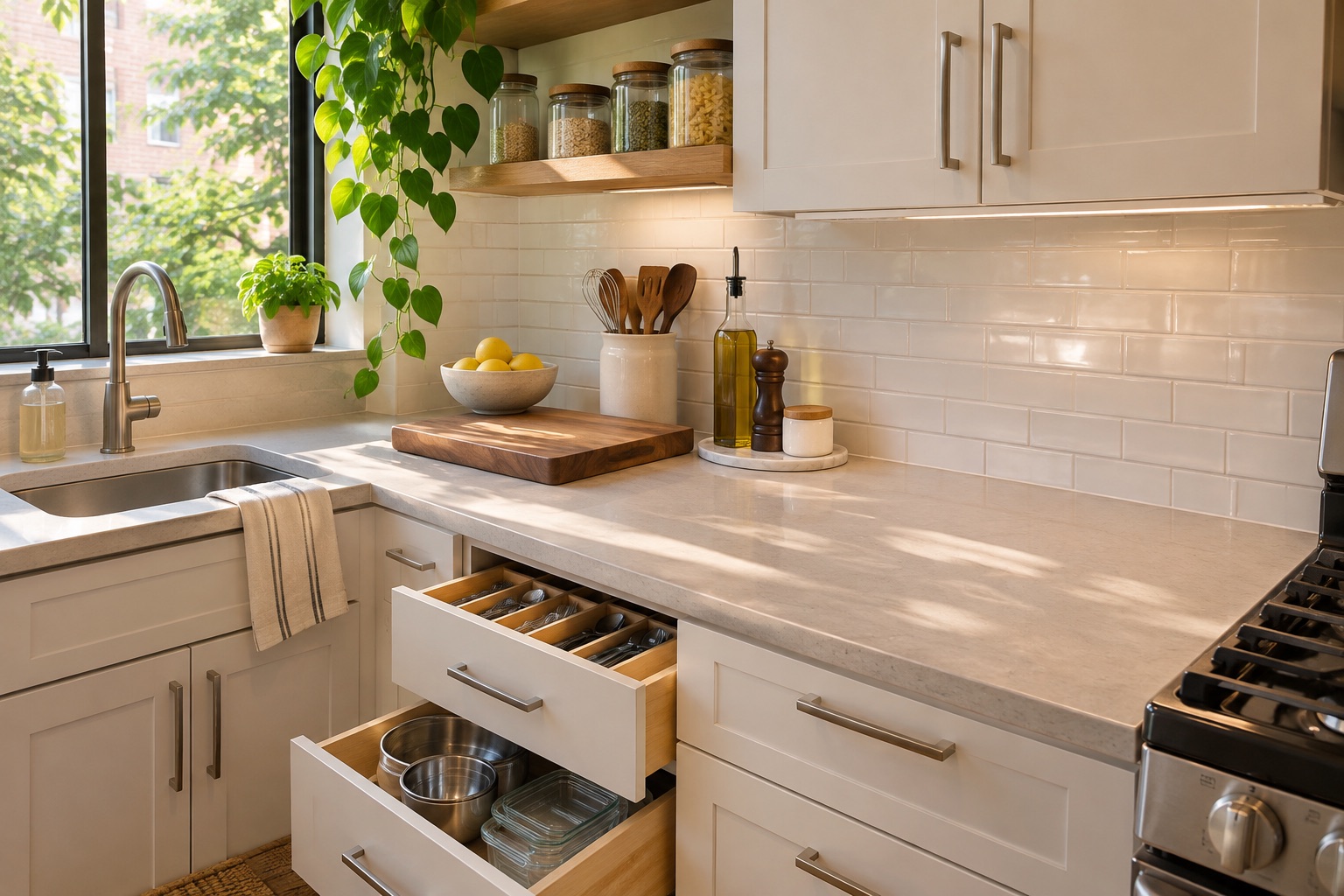
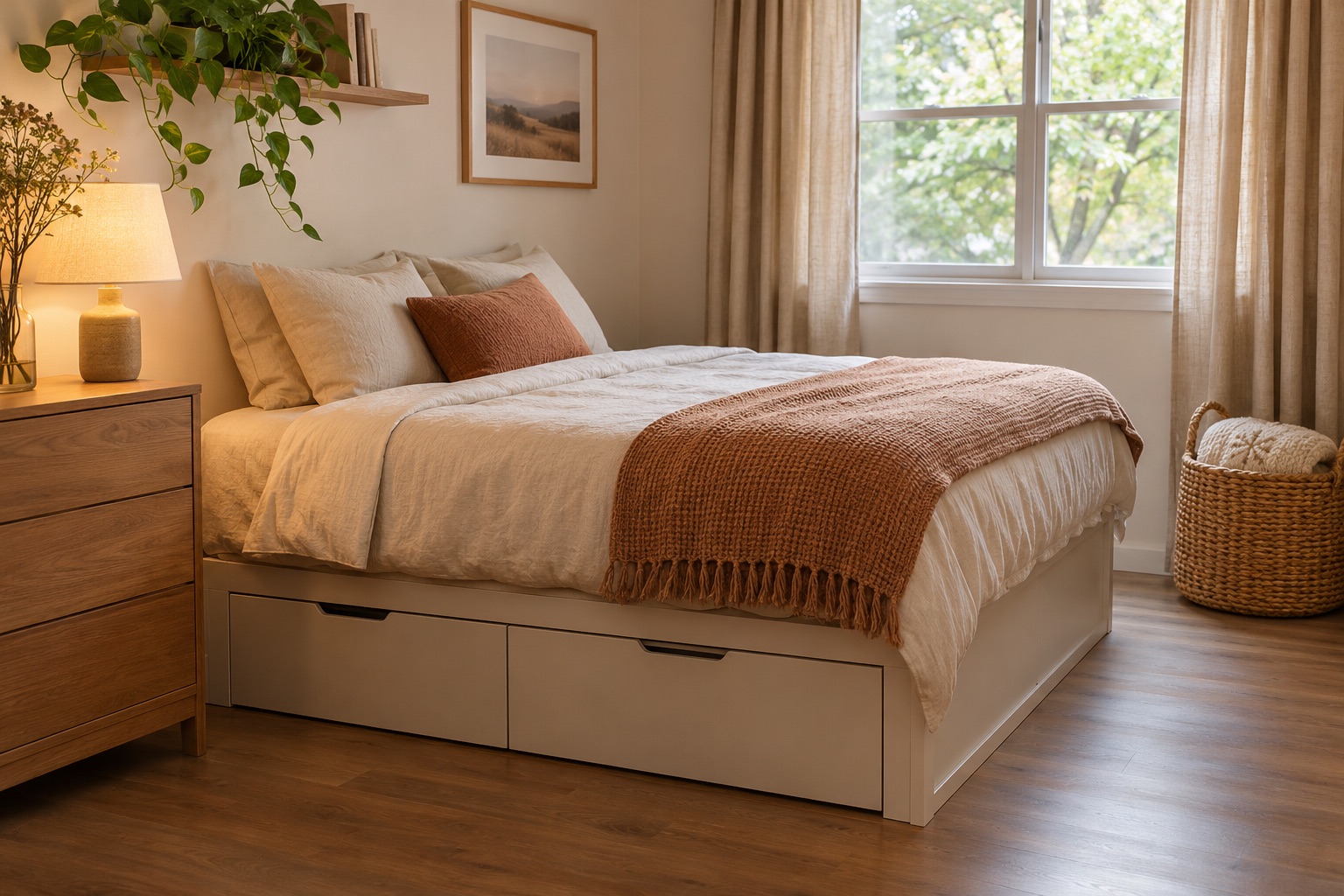
Idea 7
Use a container limit instead of endless containers
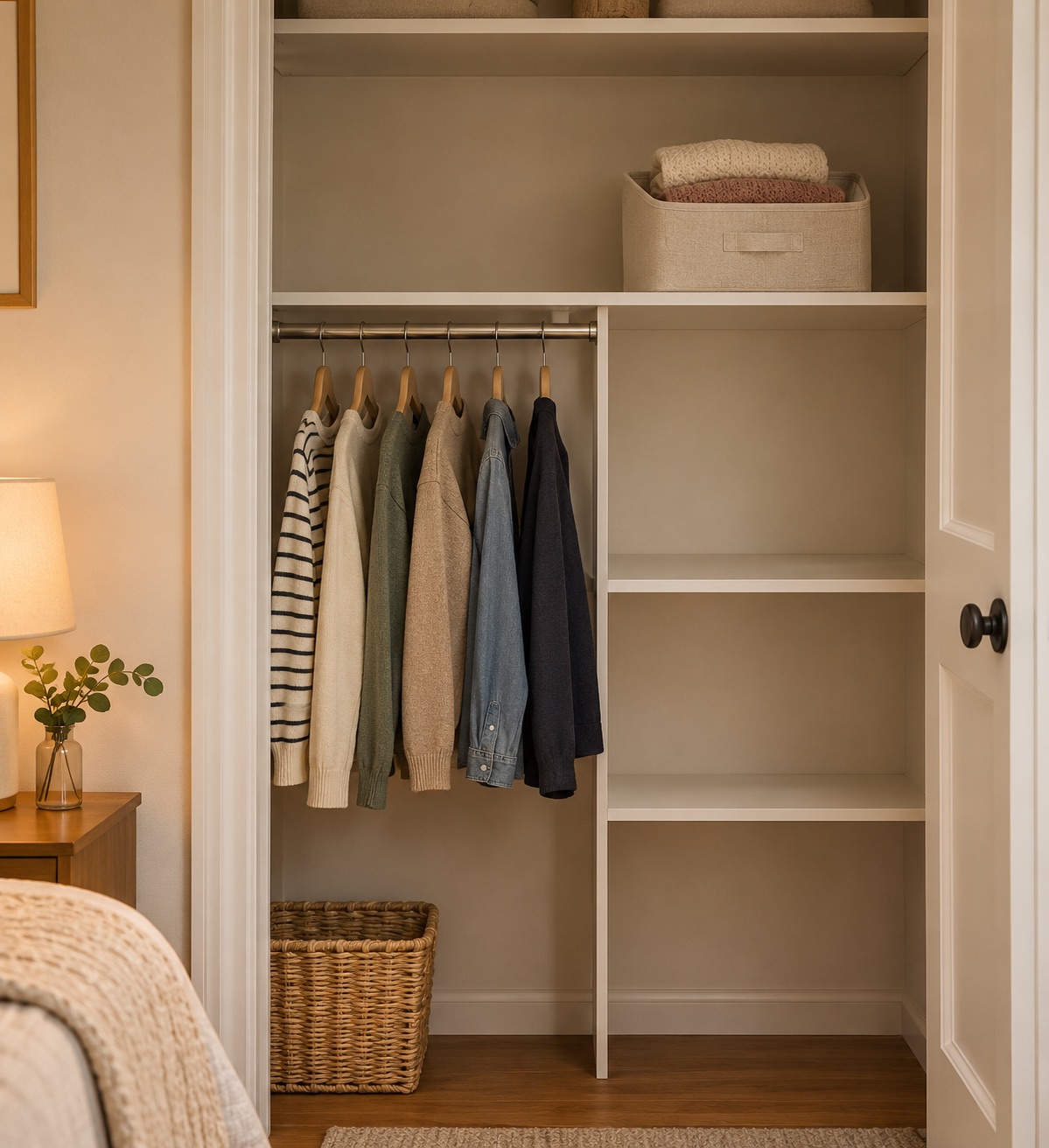
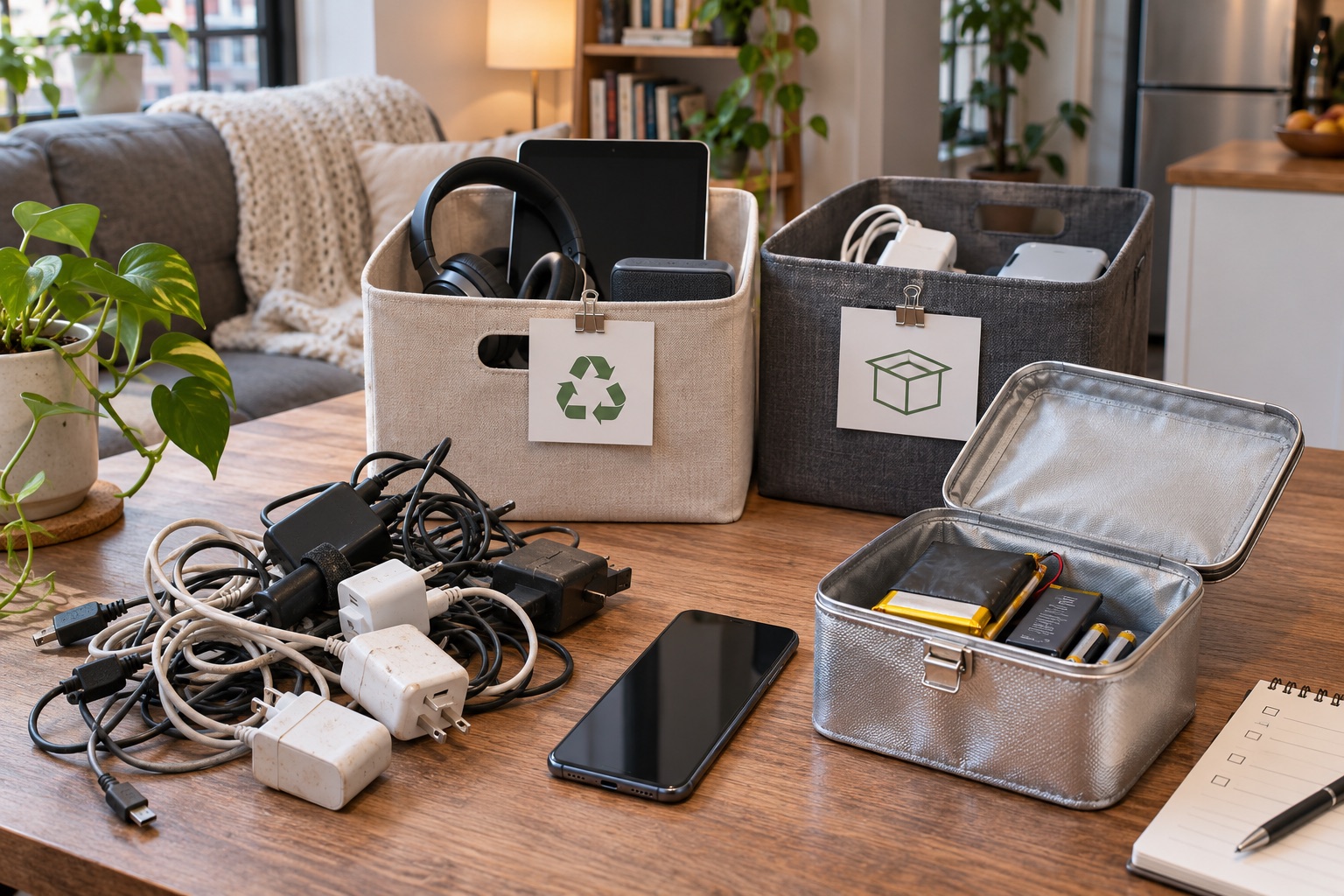
A container can hide visual clutter while allowing the total category to grow unnoticed. Use one box, basket, or drawer as a limit, then make the next decision when it fills. This works especially well for scarves, cables, craft materials, cleaning cloths, and seasonal accessories that do not need to occupy the room every day.
Make it work: Label the category by function, not by vague ambition. “Current cables” is more useful than “electronics.”
Idea 8
Edit before adding vertical storage

Vertical storage can be valuable, but it can also move every unresolved item into a taller pile. Remove duplicates and broken items first. Then ask whether the remaining category needs display, concealed storage, or easier access. A narrow shelf with breathing room often works better than a larger unit filled to its edges.
Make it work: Leave at least one visible area empty. Empty space is evidence that the system has capacity, not wasted space.
Idea 9
Group duplicates before choosing favorites
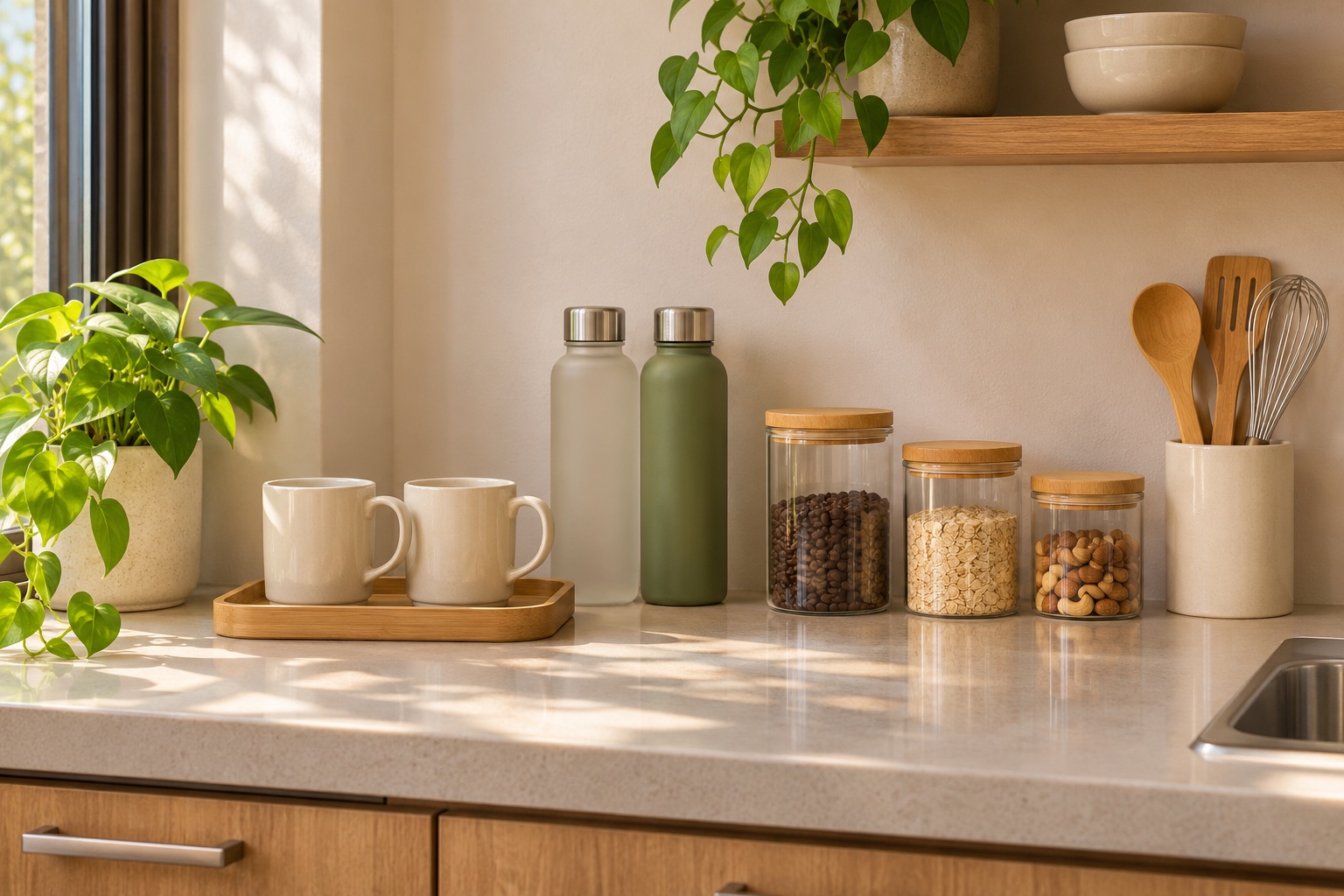
Duplicates are not automatically wasteful. They become a problem when you cannot tell which ones serve a real role. Put similar items together and compare condition, comfort, size, frequency of use, and replacement difficulty. Keep the strongest set for your actual household rather than the largest set you can fit into a drawer.
Make it work: Do not decide from memory. Place every duplicate in view, then make the choice once.
4. Build an exit route for items that leave
Decluttering is incomplete when removed items stay in the apartment for another month. Separate the next destination early, but do not assume every organization accepts every item.
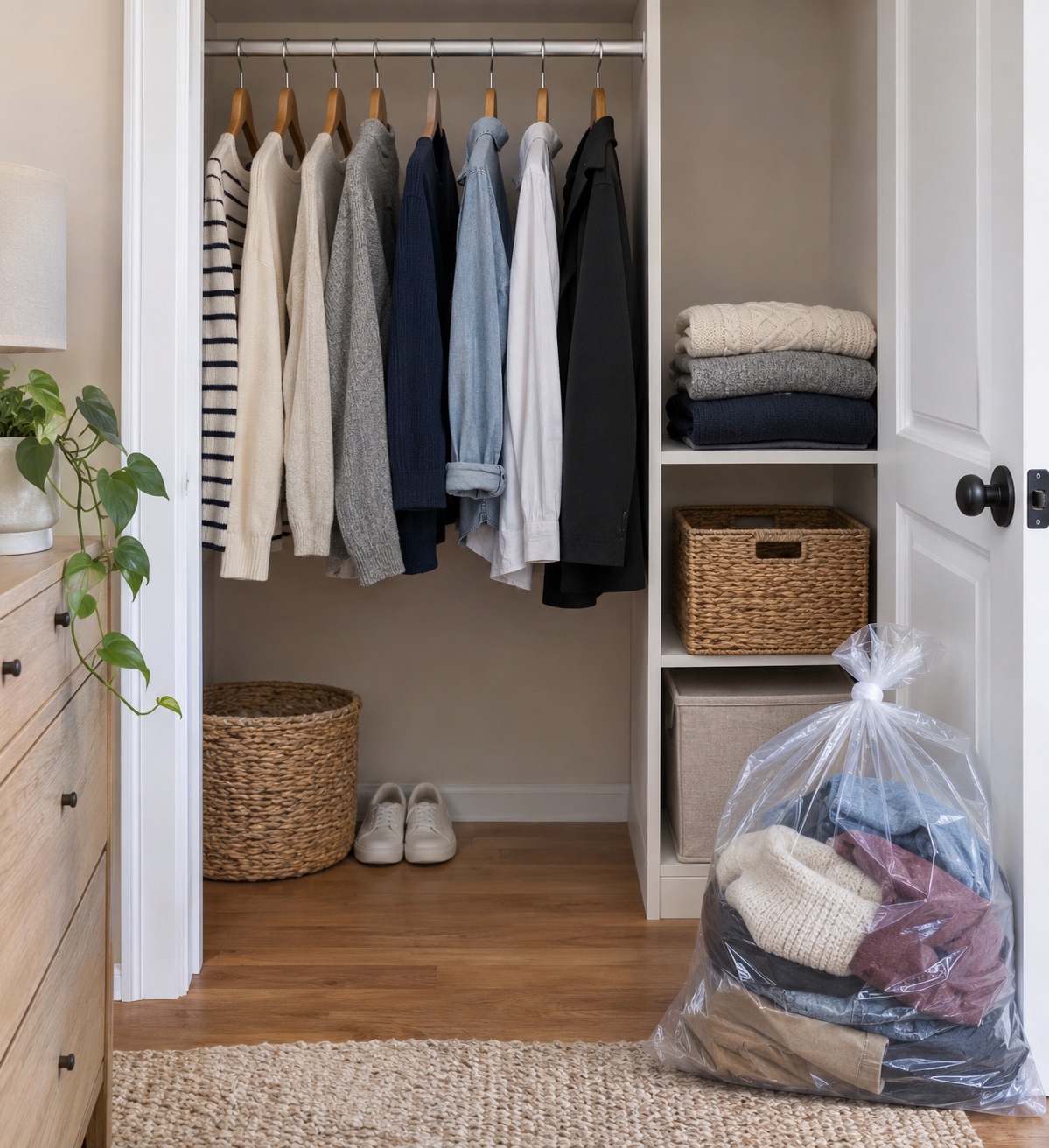

Idea 10
Create a leave-the-home box
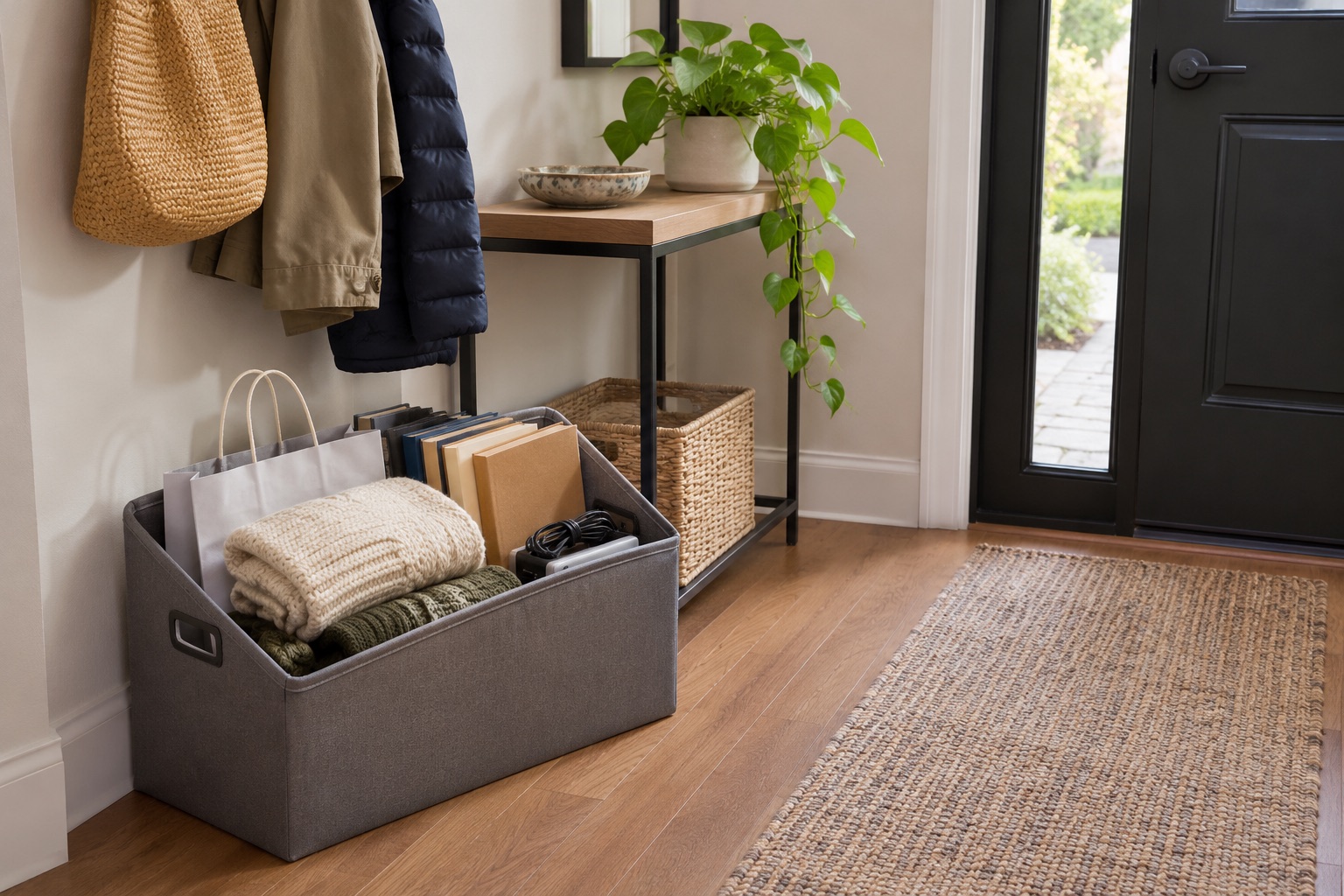
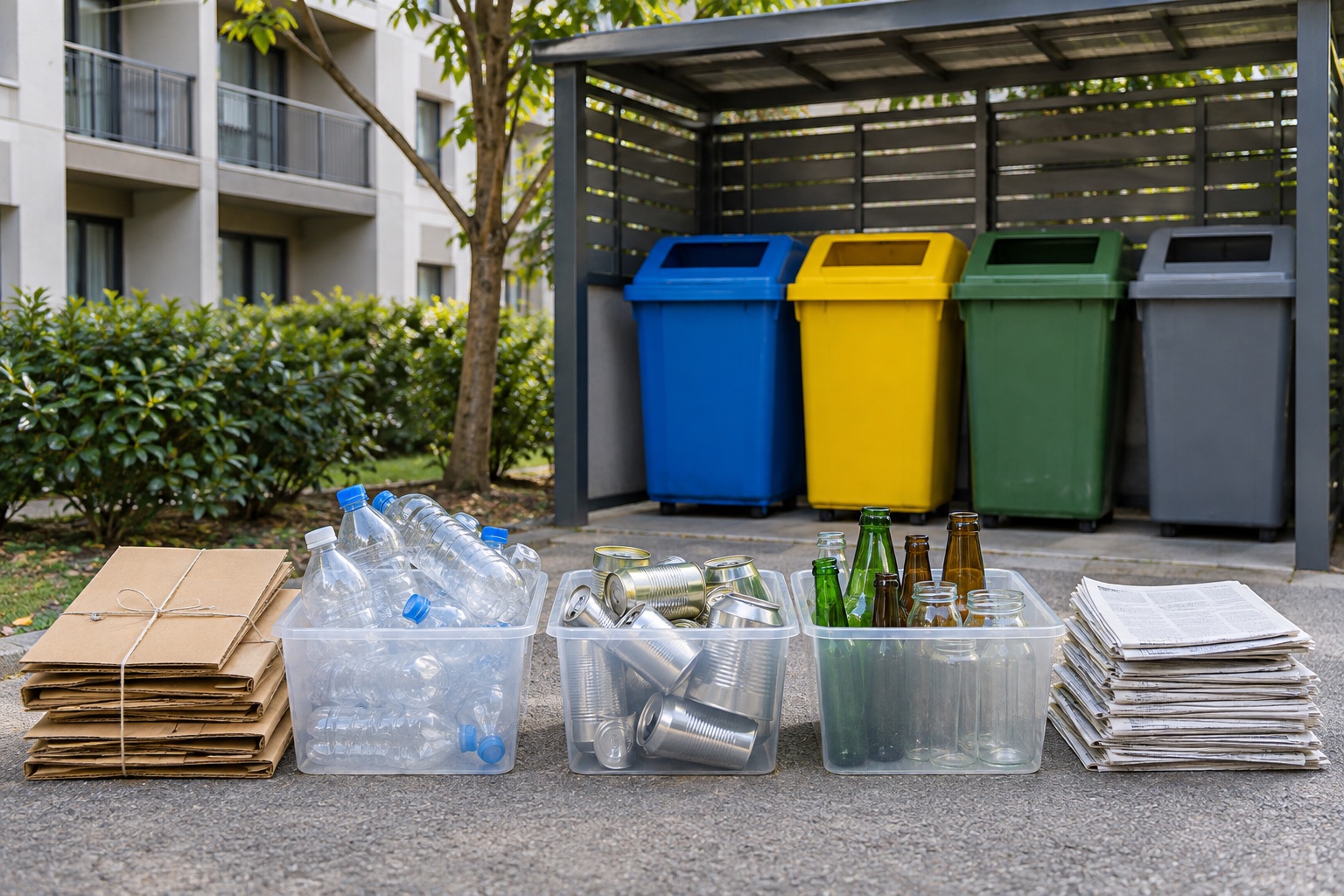
A leave-the-home box prevents the “donate later” pile from becoming permanent furniture. Use it for returns, donations, borrowed items, repairs, or recycling that has a confirmed destination. Keep it near the exit, but do not block the door or emergency route.
Make it work: Choose a box that is easy to carry. Empty it on a fixed day or when it reaches a safe weight, whichever comes first.
Idea 11
Keep safety-critical clearance non-negotiable
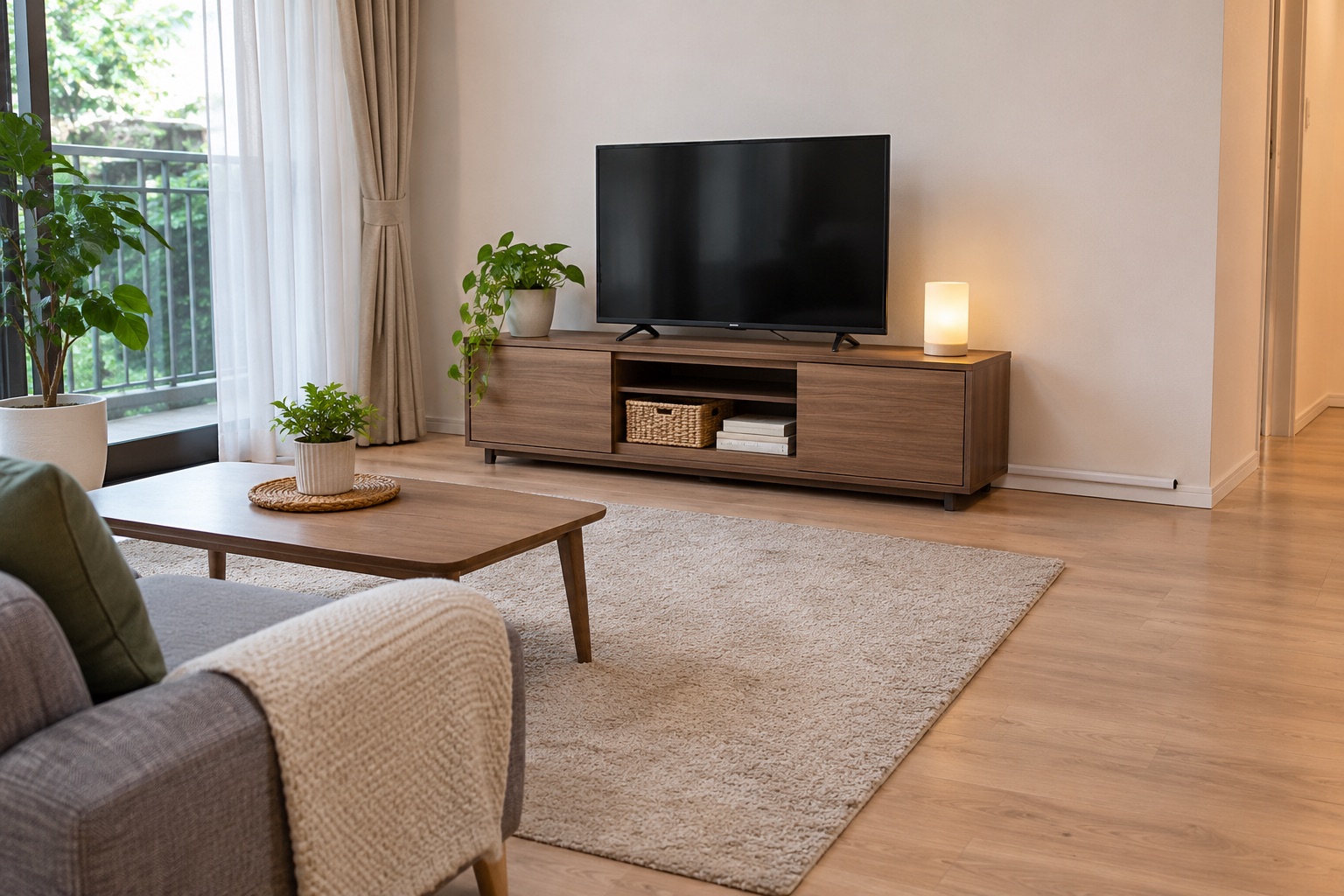
A decluttering system should never trade safety for visual calm. Keep doors, windows, heaters, exits, and appliance ventilation clear. Tall furniture and televisions may require anchoring or another manufacturer-approved safety method. Renter status does not make an unstable unit safe, so check the lease and ask for an approved solution rather than simply ignoring the risk.
Make it work: Treat clearance and stability as hard limits. If a piece cannot be secured or positioned safely, it does not belong in that location.
Idea 12
Use open bins only for categories you can see and reset
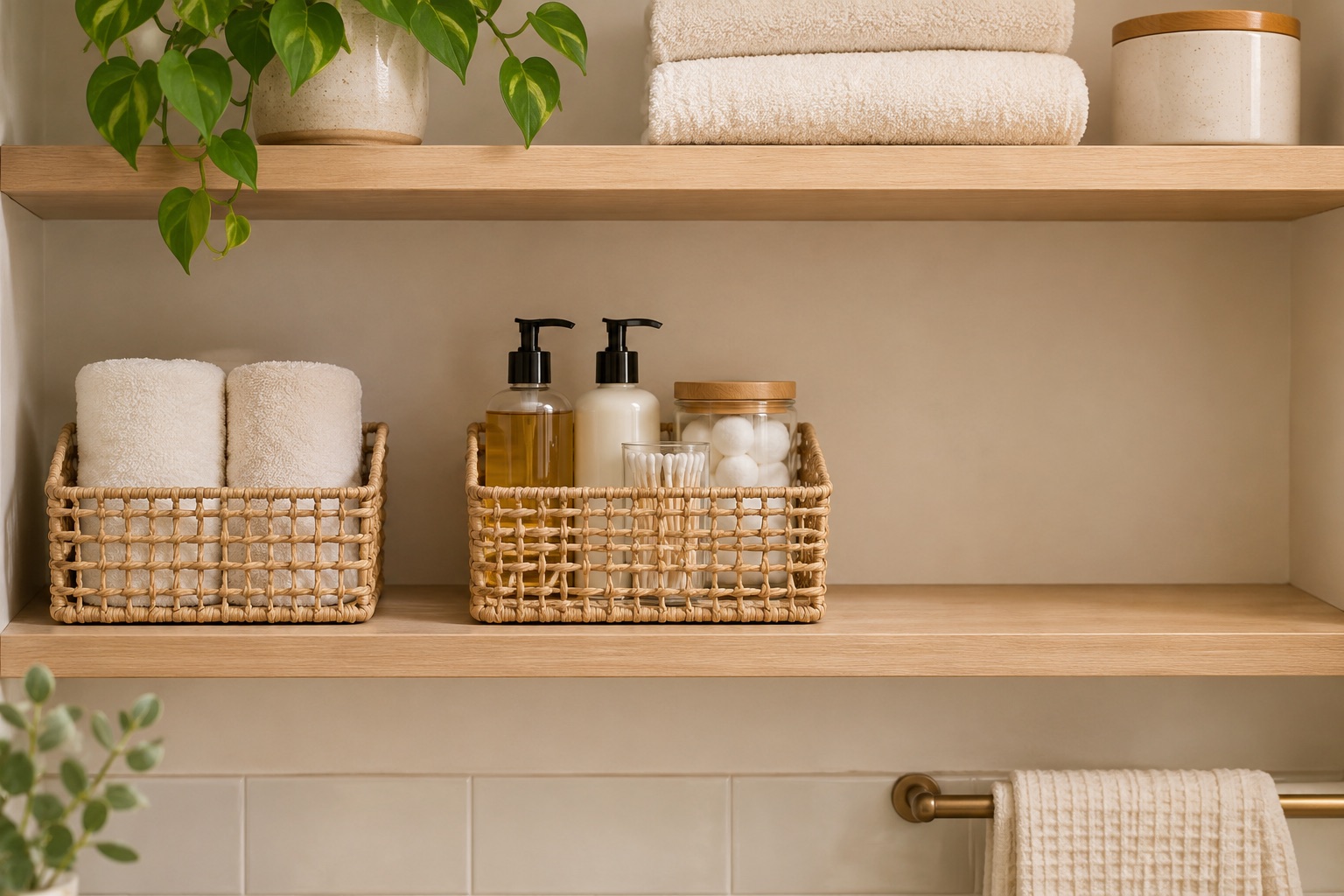
Open bins are useful when they reduce a repeated decision, such as collecting cleaning cloths or daily hair tools. They are less useful when they become unsearched containers for everything without a home. Choose a visible category, keep the bin accessible, and remove items that do not belong each time you reset it.
Make it work: If you cannot name the category in one short phrase, pause before buying another basket.
5. Edit the rooms that collect daily noise
Kitchen counters, bathroom shelves, and closets often collect objects because they are used frequently. The answer is not to make them sterile. It is to make the current-use layer easy to see and the backup layer controlled.
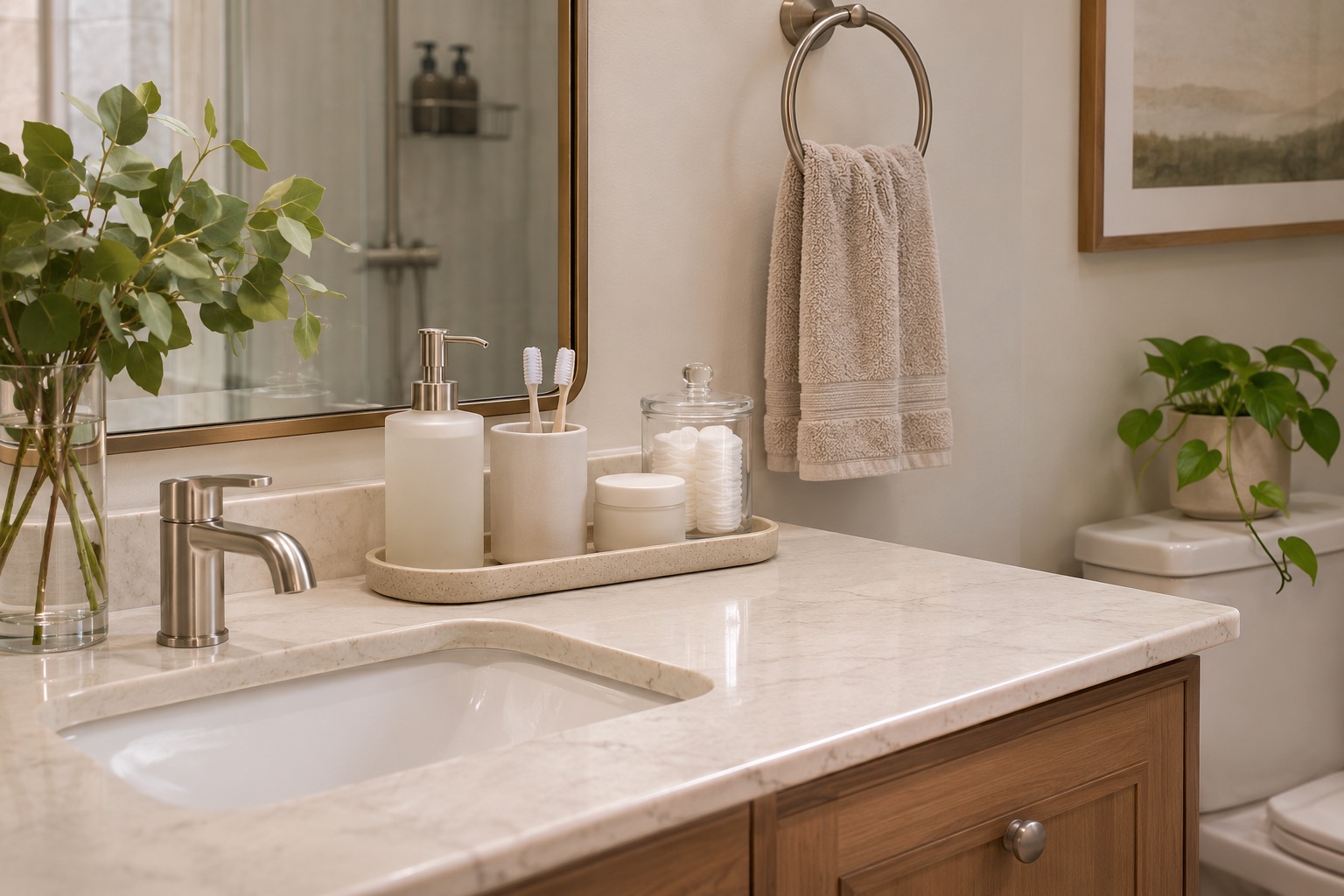
Idea 13
Edit the kitchen counter into one useful zone
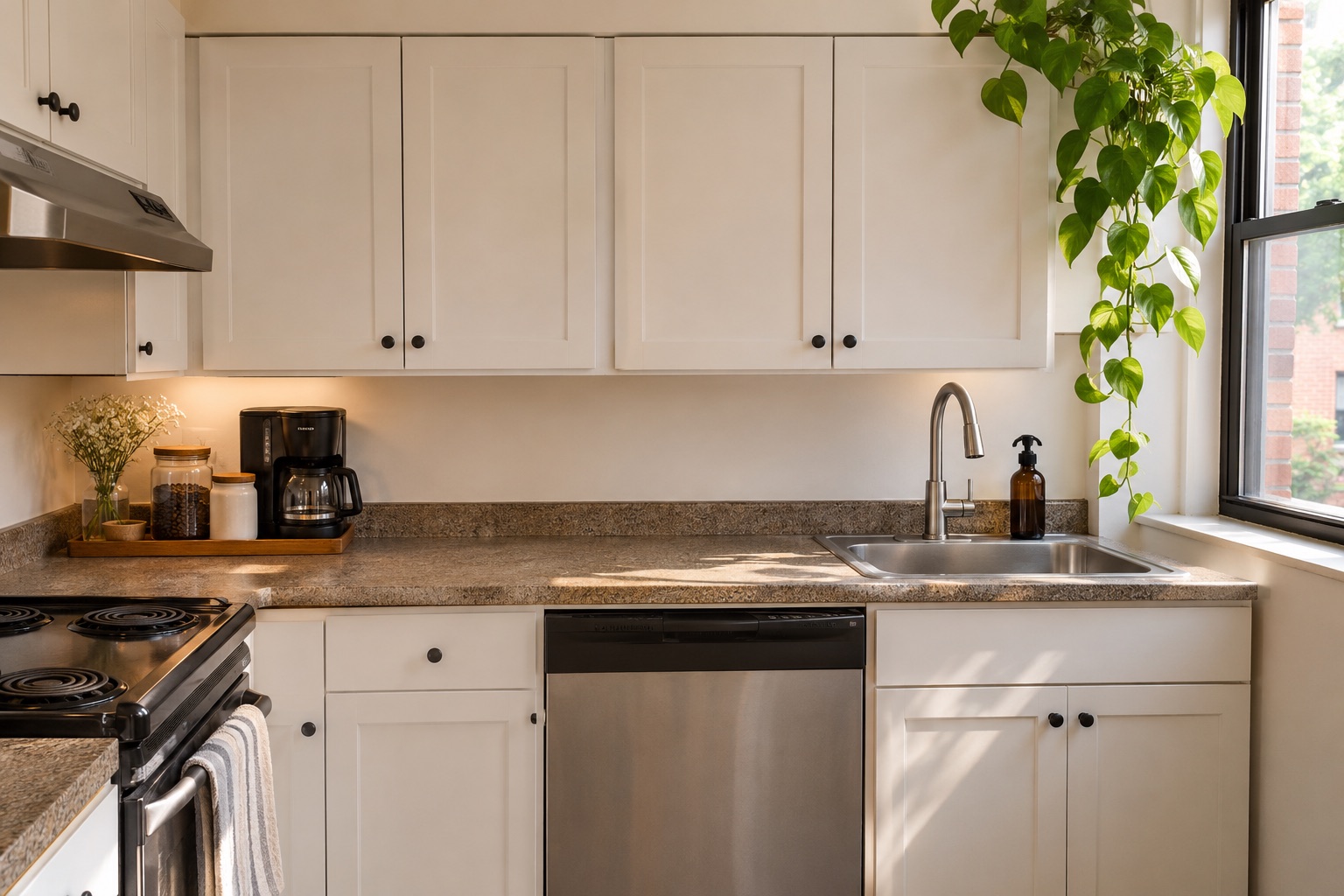
A small kitchen needs work surface more than it needs decoration. Choose one zone for coffee, breakfast, prep, or cooking, then return every other item to a drawer, shelf, or cabinet. This does not mean hiding everything. It means deciding which objects deserve to stay visible because they support the way the kitchen is actually used.
Make it work: Clear the counter completely once. Put back only what you used during the next two meals.
Idea 14
Keep only current-use bathroom products visible
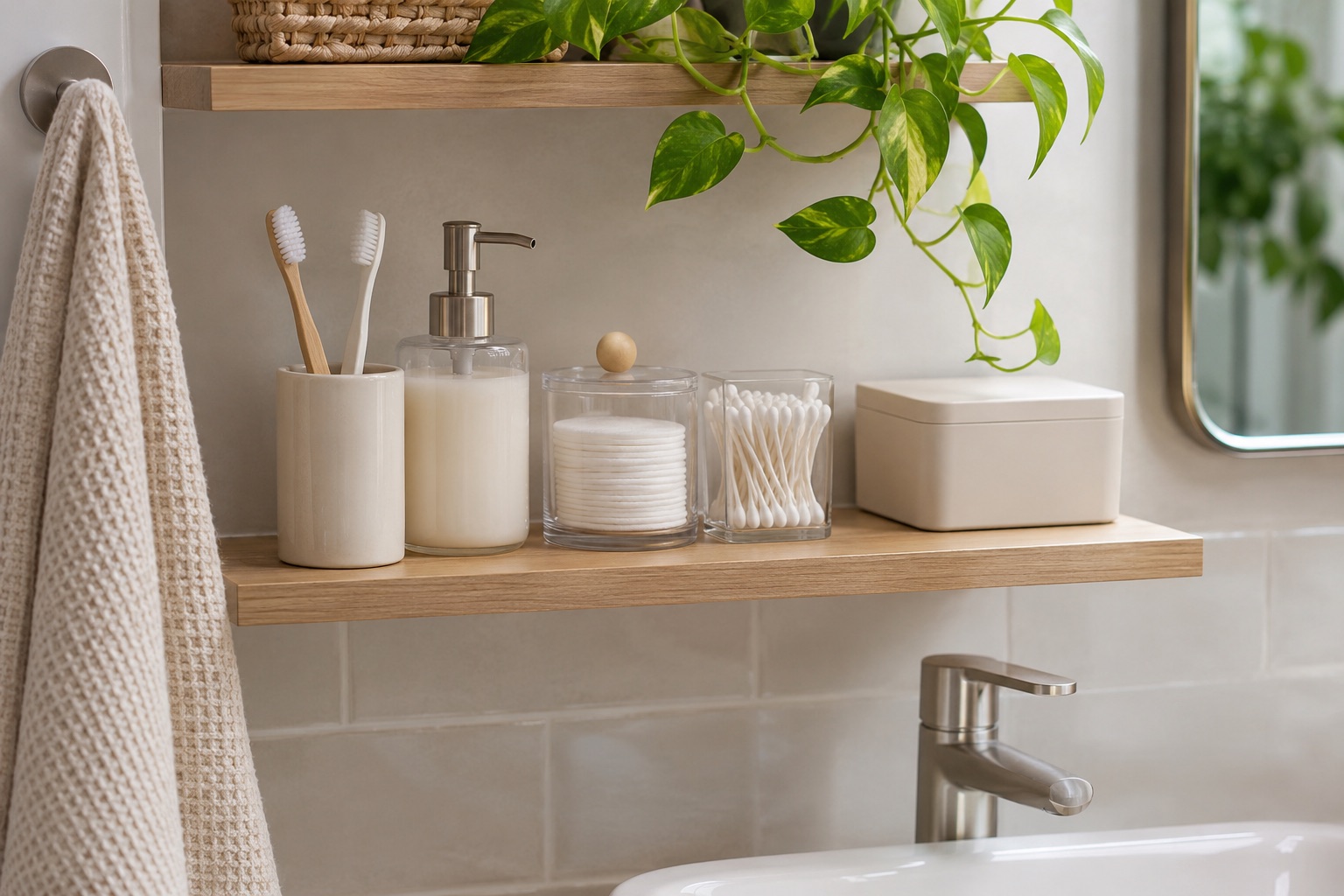
Bathrooms become crowded through backups, samples, expired products, and items that belong to another room. Separate the products used this week from unopened backups and uncertain items. Check labels, dates, and local disposal guidance instead of pouring unwanted chemicals down a drain or placing special waste in ordinary bins.
Make it work: Use one tray for current use and one closed place for verified backups. Do not let the sink edge become long-term storage.
Idea 15
Simplify the wardrobe rotation
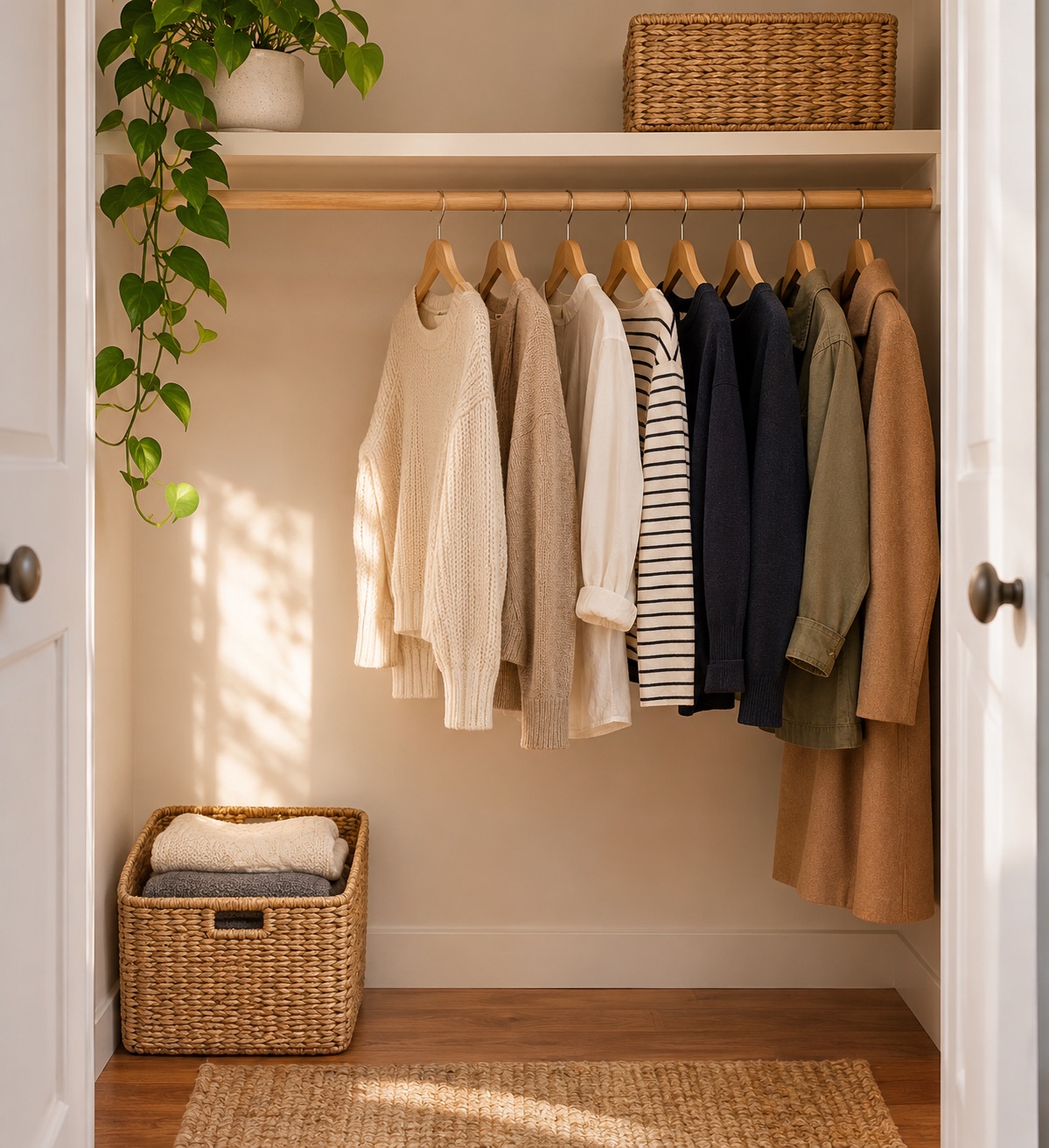
A small closet does not need to hold every season at full volume. Create a practical active rotation based on the weather, work, laundry rhythm, and real activities in your life. Store only clean, genuinely wanted off-season items elsewhere, and use the transition as a chance to notice duplicates or uncomfortable pieces.
Make it work: Keep one small category for items that need repair or a final decision. Give it a date rather than letting it become permanent uncertainty.
6. Reduce paper, technology, and decision clutter
Not all clutter is furniture or clothing. Paper, chargers, devices, and half-finished administrative tasks can occupy attention even when they take little floor space.
Idea 16
Create one active paperwork home
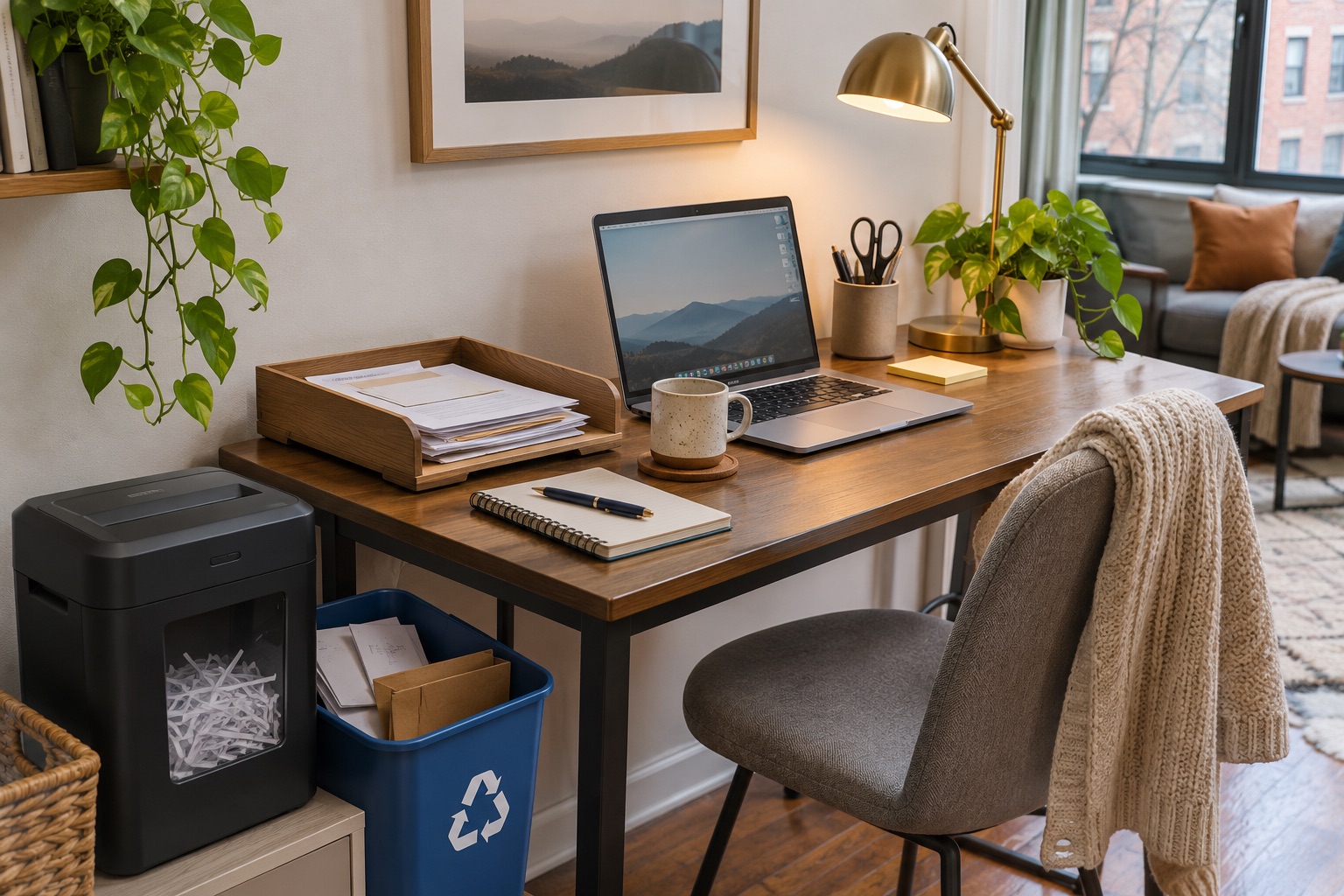
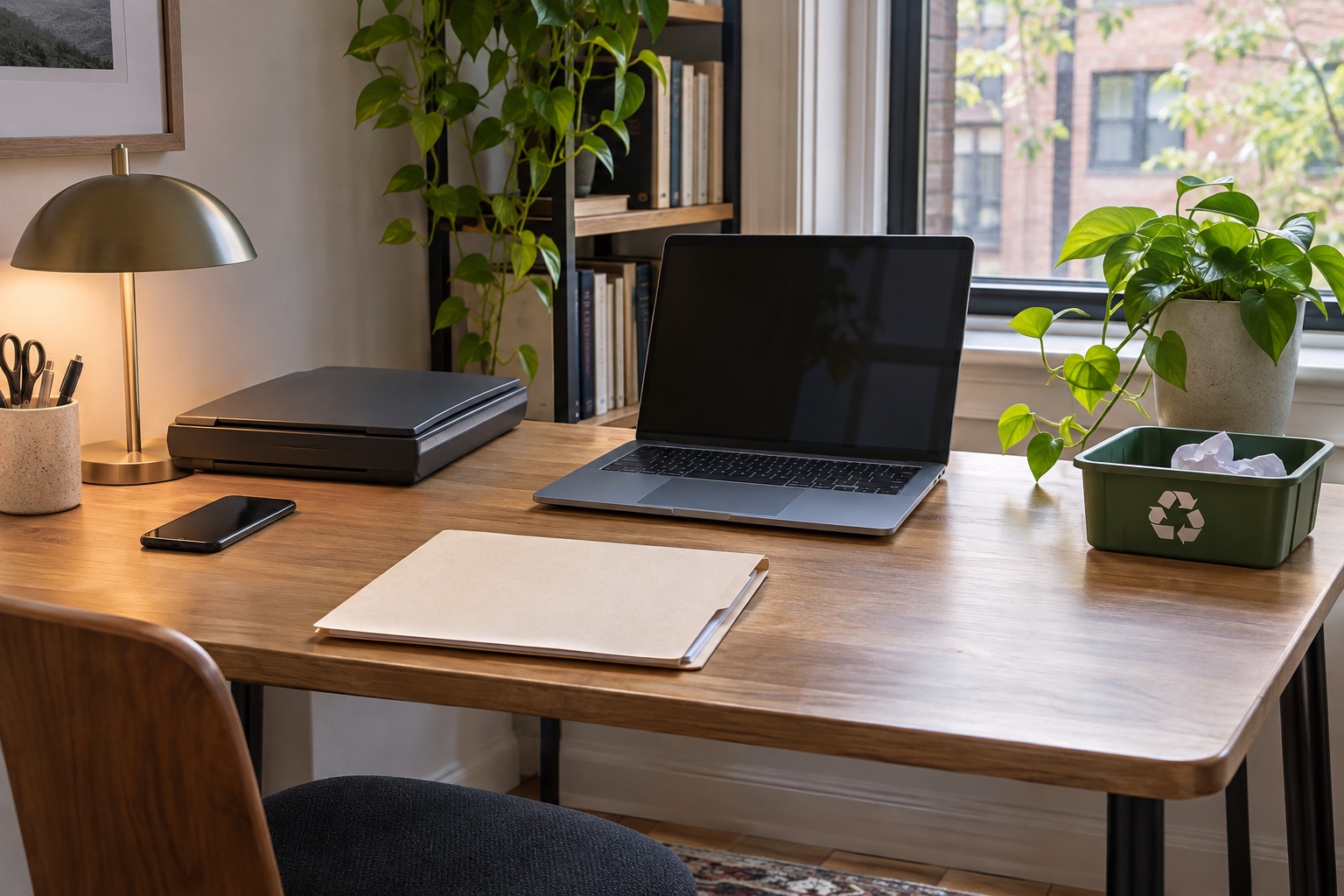
Paper multiplies when every item feels equally urgent. Choose one active folder or tray for documents that need a response, one archive location for records you must keep, and one recycling route for papers that no longer have a purpose. Photograph or scan only when you have a secure system for storing and finding the digital copy.
Make it work: Set a short review time each week. A folder without a review date is just delayed clutter.
Idea 17
Make sentimental items deliberate, not invisible
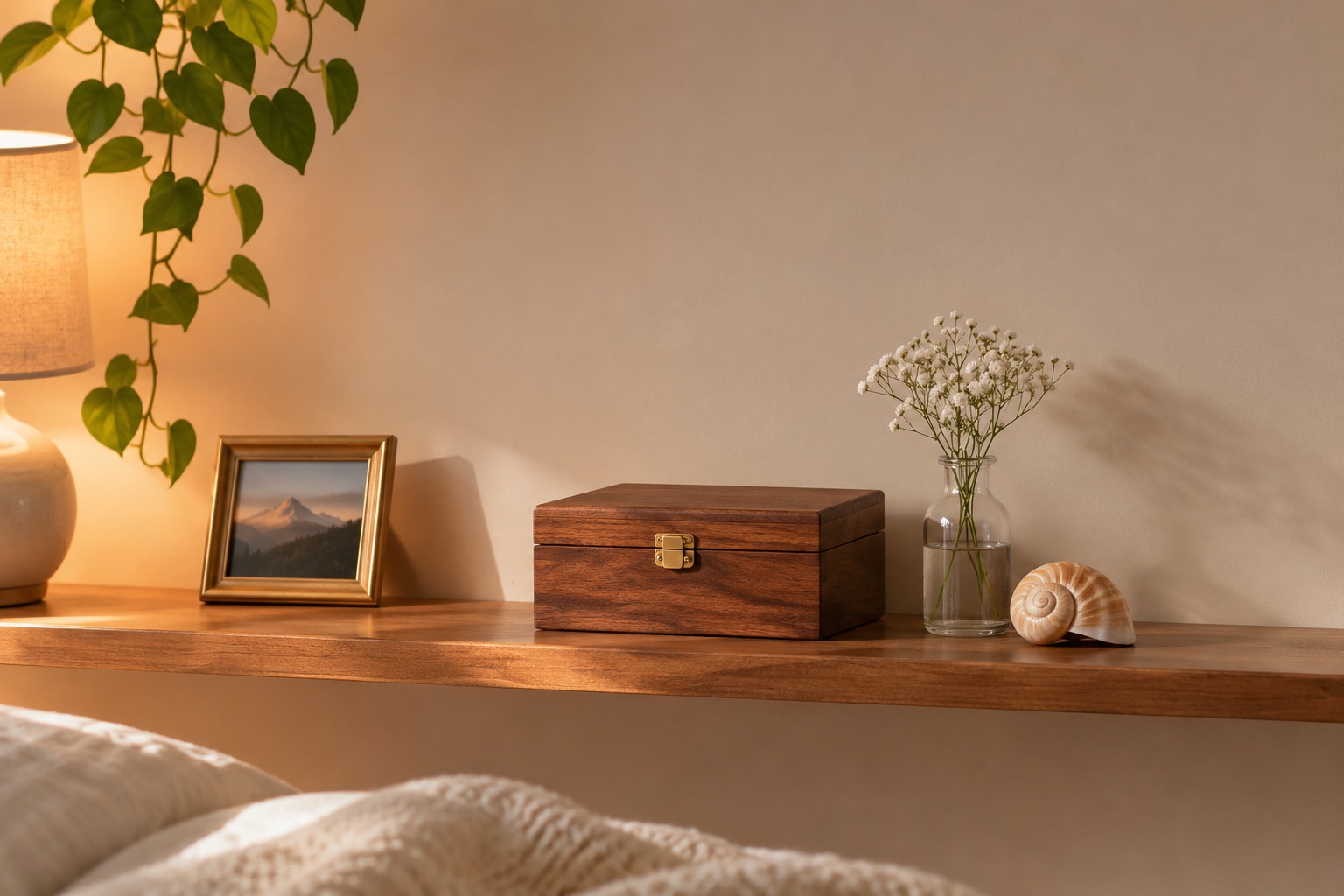
Meaningful objects deserve care, but every object does not need to be displayed or stored at the front of the apartment. Choose a visible few, then give the rest one protected container or archive. The purpose is not to rank memories. It is to stop sentimental decisions from spreading into every drawer and surface.
Make it work: Write a short note about why the container matters. The note can help a future decision without requiring you to relive the whole story.
Idea 18
Quarantine uncertain items instead of forcing a decision
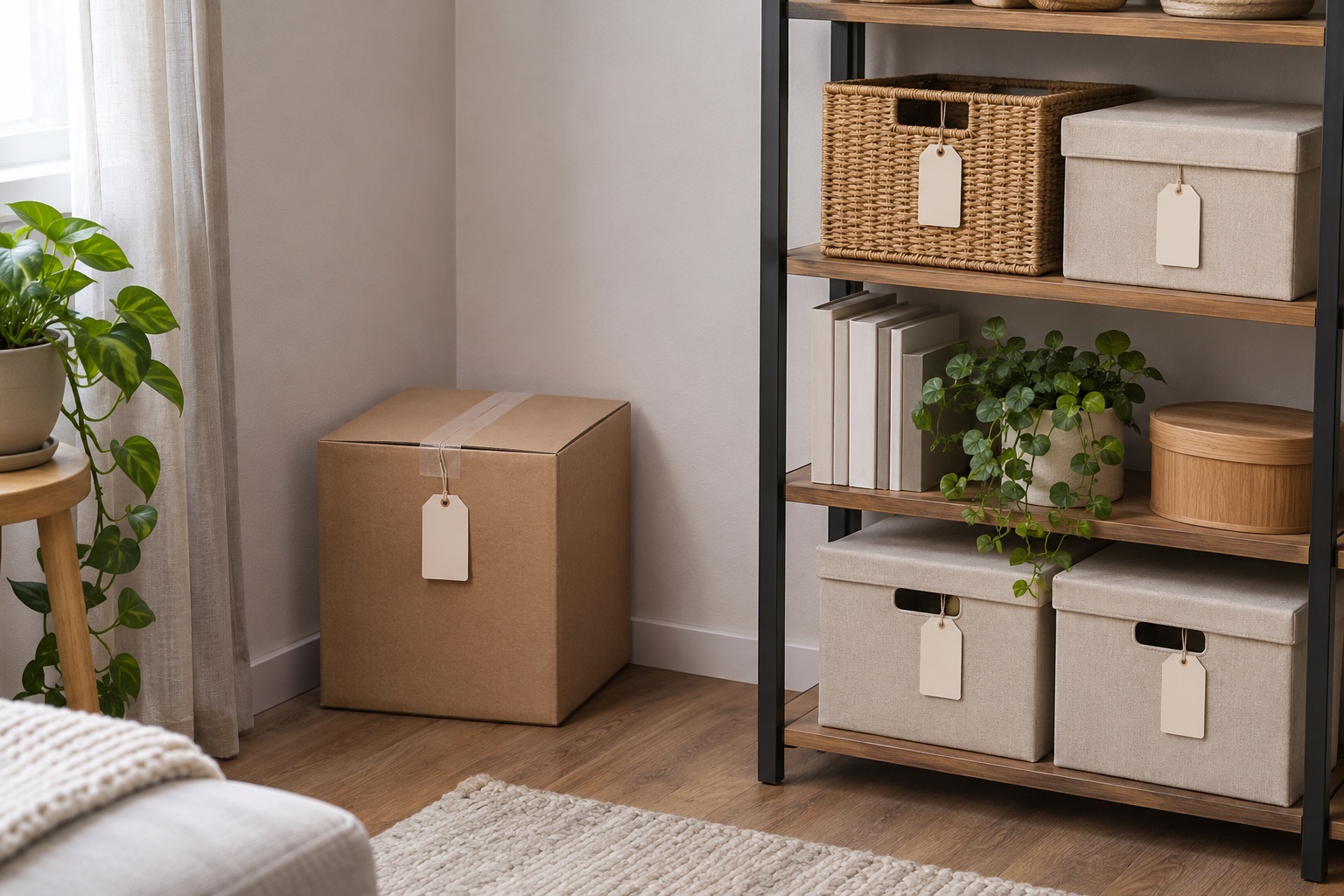
Some decisions are uncertain because you need a season, a repair estimate, a family conversation, or a test without the item. Put those objects in a temporary box with a review date. This creates breathing room without pretending that uncertainty is the same as a permanent keep.
Make it work: Use a real date and a real question: Did we need it? Did we repair it? Did someone claim it? If the answer is still unclear, choose the next smallest decision.
7. Make the reset easy enough to repeat
The best decluttering system is not the one that looks perfect on day one. It is the one that survives a busy week, a late return home, and the next delivery at the door.

Idea 19
Create a five-minute reset routine

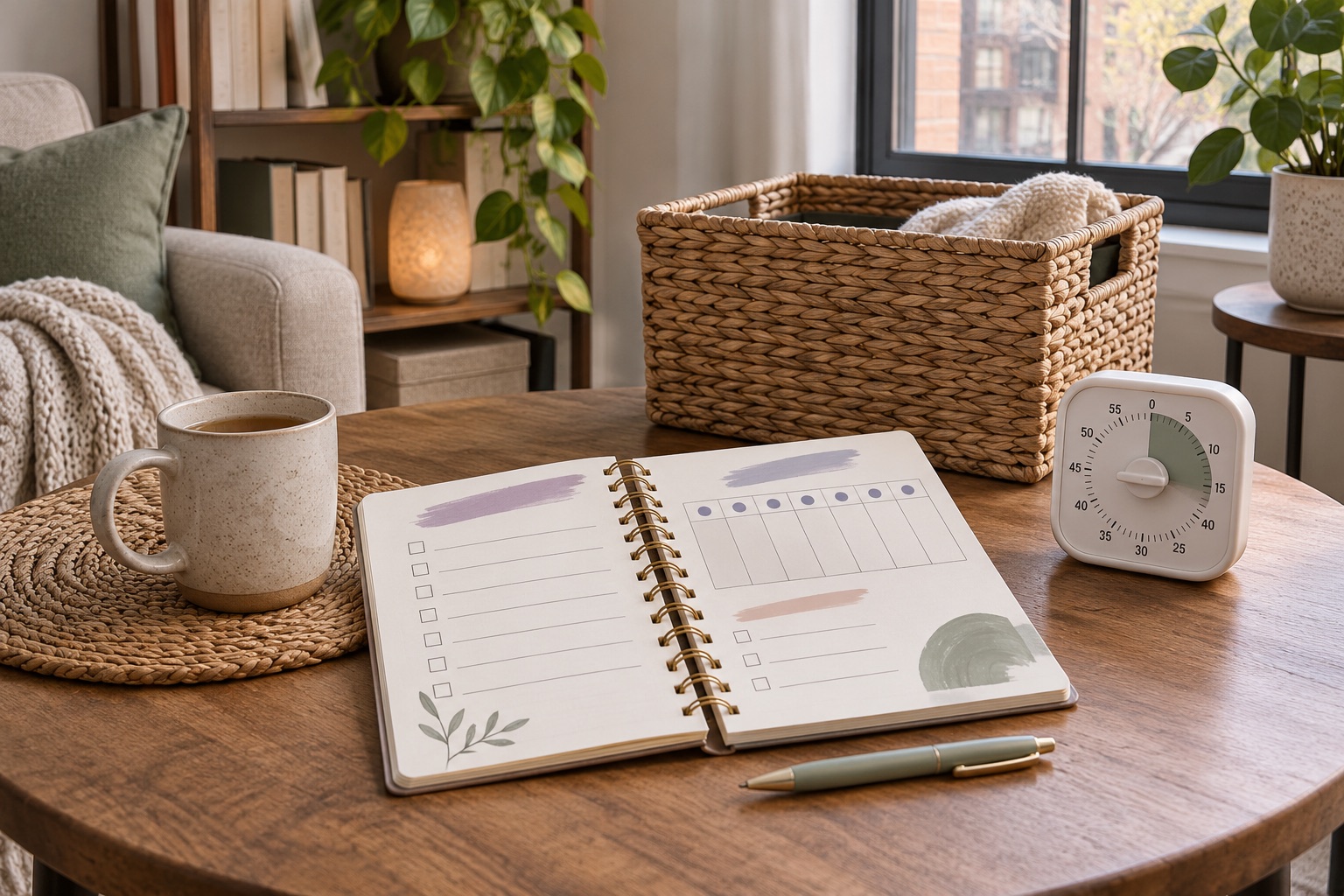
A short reset is more useful than a heroic cleaning session that cannot be repeated. Choose three actions: return items to their homes, clear the main route, and move one item toward its next destination. Keep the routine tied to an existing event such as turning off the kitchen light or preparing for bed.
Make it work: Use a timer for five minutes and stop when it ends. The goal is to maintain the boundary, not to discover another project.
Idea 20
Finish with a doorway walkthrough

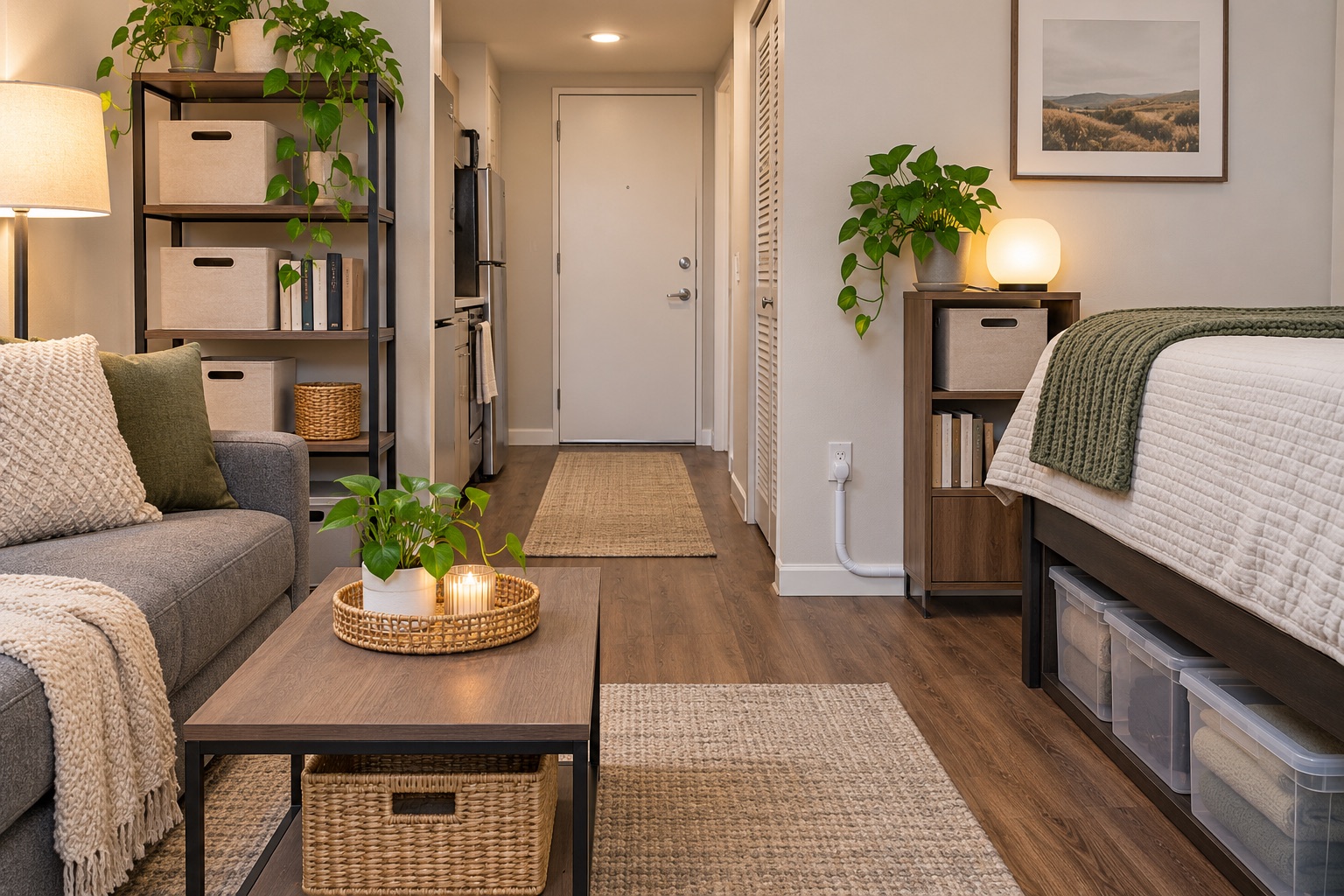
The doorway view reveals problems that disappear when you stand inside one corner. Look for blocked routes, objects without a home, surfaces carrying too many categories, and storage that has become difficult to retrieve. Then choose one final adjustment rather than reopening every decision you made.
Make it work: Take the same doorway photograph after seven days. Compare ease of use, not just visual emptiness.
8. Keep the system gentle and visible
After the first reset, do not turn the apartment into a permanent project. The useful test is whether the room remains easier to use when life is busy. Keep one small exit route, one review date for uncertain items, and one short reset that protects the walking path. If a system repeatedly fails, change the boundary or the location before adding more containers.

Decluttering is finished for now when the next action is obvious, the important routes are clear, and the things you kept have homes that match your real routines. You can revisit the category later without treating the earlier decision as a failure.
Frequently asked questions
How do I declutter a small apartment without getting overwhelmed?
Choose one repeated friction point and one category that fits on a surface. Use a timer, define the next destination for removed items, and stop when the selected problem is measurably easier.
What should I keep when space is limited?
Keep items that are used, genuinely useful, difficult to replace, or meaningfully valued. The decision should reflect your real household and routines, not an imagined minimalist lifestyle.
Should I buy storage before decluttering?
Usually no. Edit the category first, measure the remaining items, and test the space you already have. Buy or add storage only when it solves a clearly defined problem.
How should renters handle drilling or anchoring?
Check the lease and ask the landlord or property manager about approved methods before making permanent changes. For furniture and televisions, follow manufacturer safety guidance and do not assume that renter status removes tip-over risk.
What should I do with old electronics, batteries, paint, or cleaners?
Do not assume these belong in ordinary trash or curbside recycling. Check your local waste provider or household hazardous-waste program, and erase personal data before donating or recycling working electronics.
Sources and safety checks
This guide is practical editorial information, not legal, medical, disposal, or professional installation advice. Renter rules, waste services, and accepted donation items vary by location and building. Verify the current local requirement before acting.